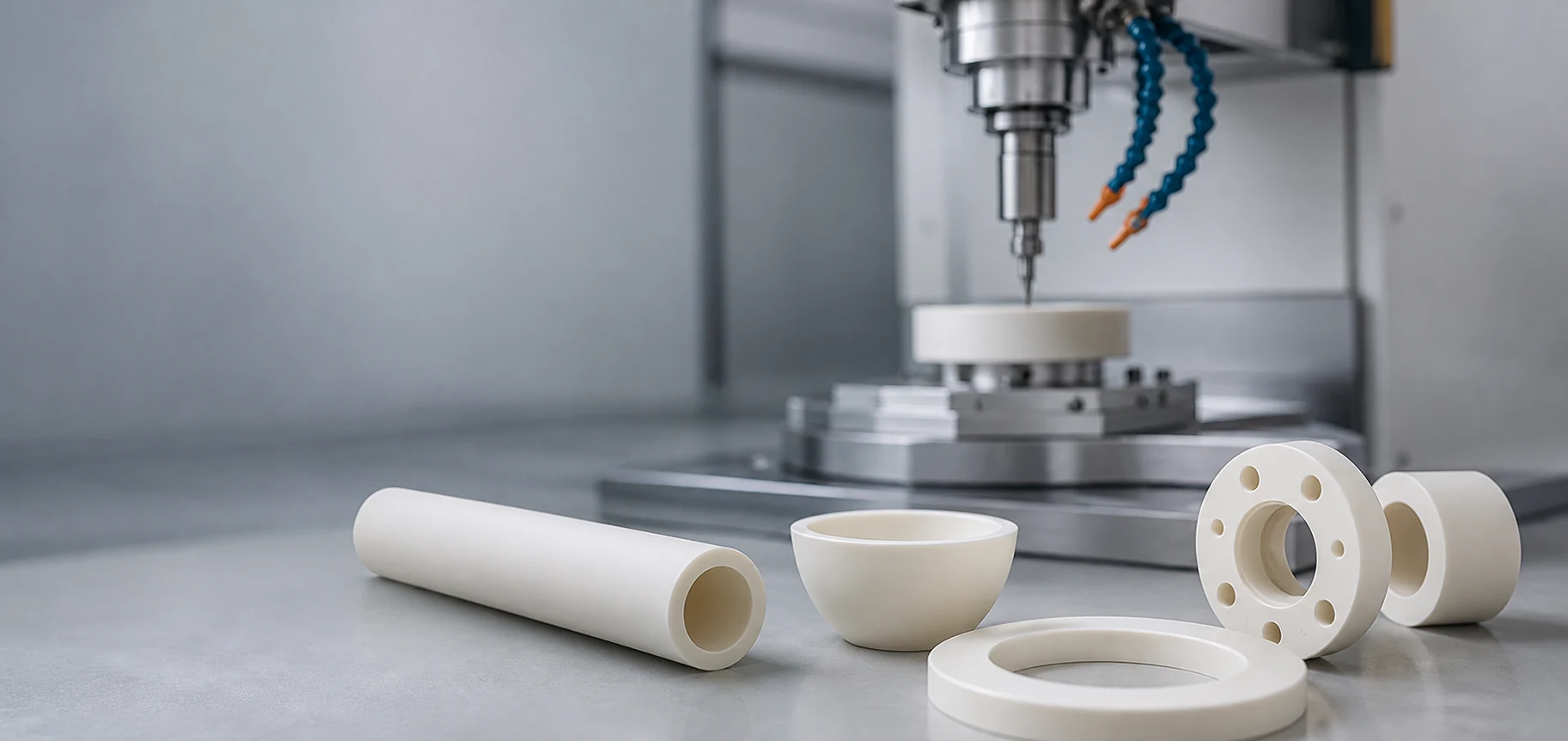
Engineering-Driven Advanced Ceramic Components
From material selection and DFM review to precision machining and scalable production, UNIPRETEC helps engineering teams turn demanding ceramic designs into reliable components.
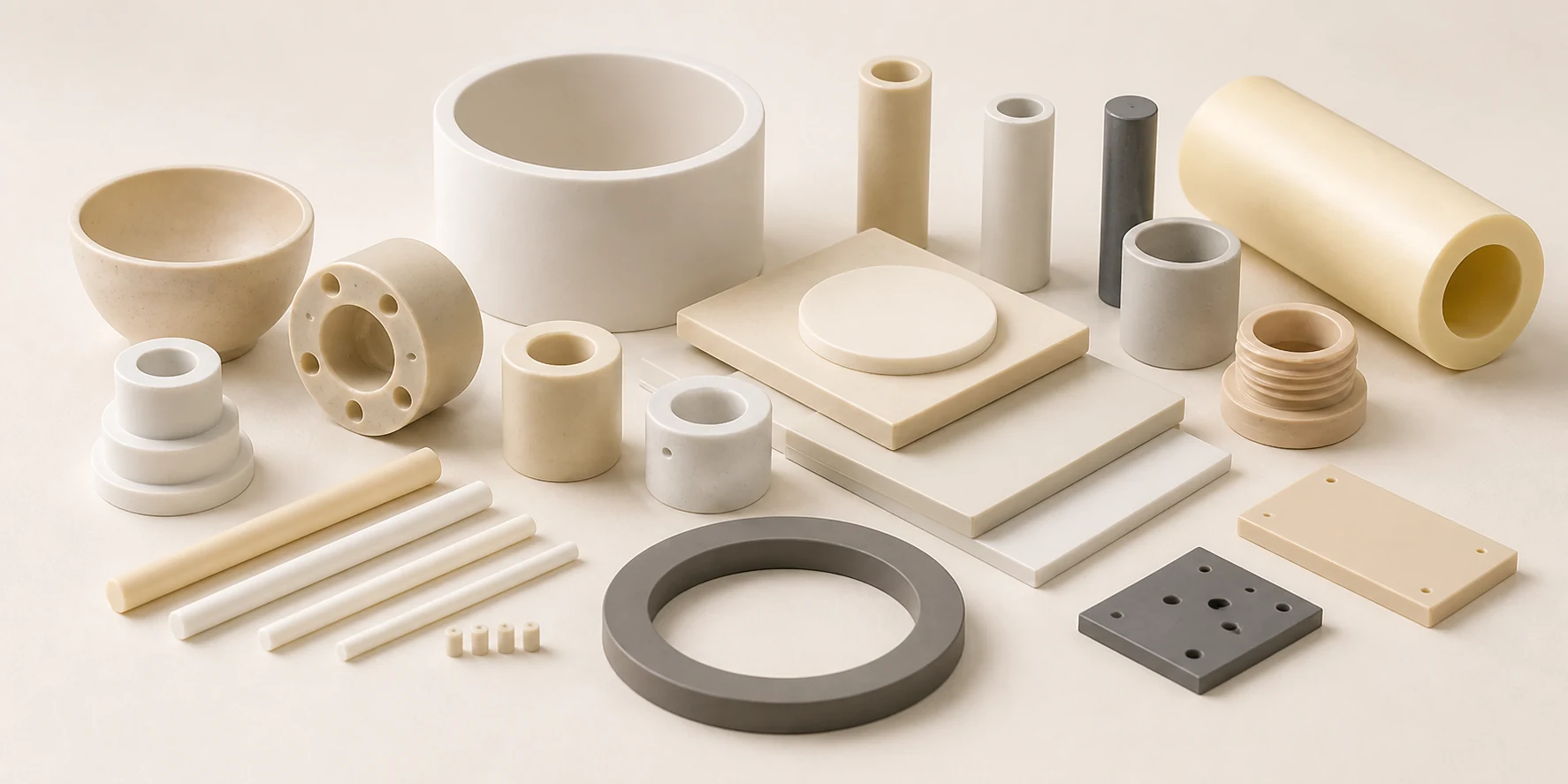
Choose the Ceramic Around the Failure Risk
Different ceramic materials solve different combinations of wear, heat, insulation, corrosion and fracture risk. Start with the operating condition—not just the drawing.
Alumina Ceramic
Balanced wear resistance, electrical insulation and cost for general industrial components.
Explore Alumina →Zirconia Ceramic
Higher fracture toughness and fine surface capability for plungers, sleeves and wear parts.
Explore Zirconia →Aluminum Nitride
High thermal conductivity with electrical insulation for power and semiconductor packaging.
Explore AlN →Silicon Nitride
Thermal shock resistance and strength for demanding power electronics and mechanical use.
Explore Si₃N₄ →Boron Nitride
Machinable, non-wetting and thermally stable for vacuum, furnace and molten-metal environments.
Explore BN →Ceramic Substrates
Alumina, AlN and Si₃N₄ substrates for insulation, heat dissipation and circuit integration.
Compare Substrates →Machinable Glass Ceramic
Useful for precision prototypes and complex insulating parts when conventional firing is unsuitable.
Review Material Fit →ZTA & Custom Grades
For projects that need a tailored balance of hardness, toughness and manufacturing feasibility.
Discuss a Custom Grade →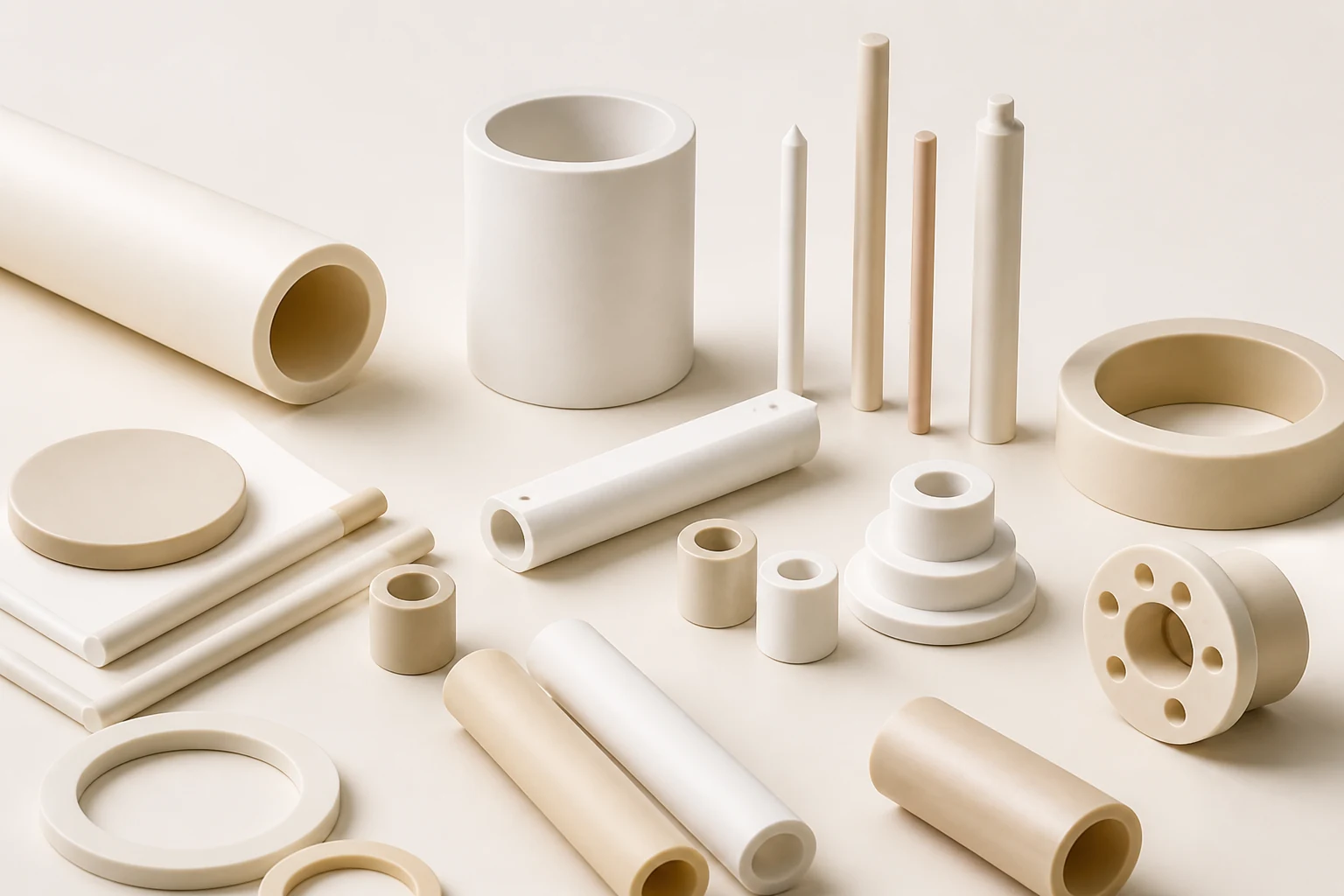
Start With the Part You Need to Manufacture
Use component type as the fast route, then validate material, wall thickness, tolerance and finishing requirements with engineering.
Reduce Ceramic Design Risk Before Production
The most expensive ceramic problem is often locked into the design before the first part is made. Review material, geometry, tolerance and process route early.
One Process Route From Powder to Inspected Part
Each stage changes what is technically possible. The route should be selected around material, geometry, quantity, tolerance and cost—not habit.
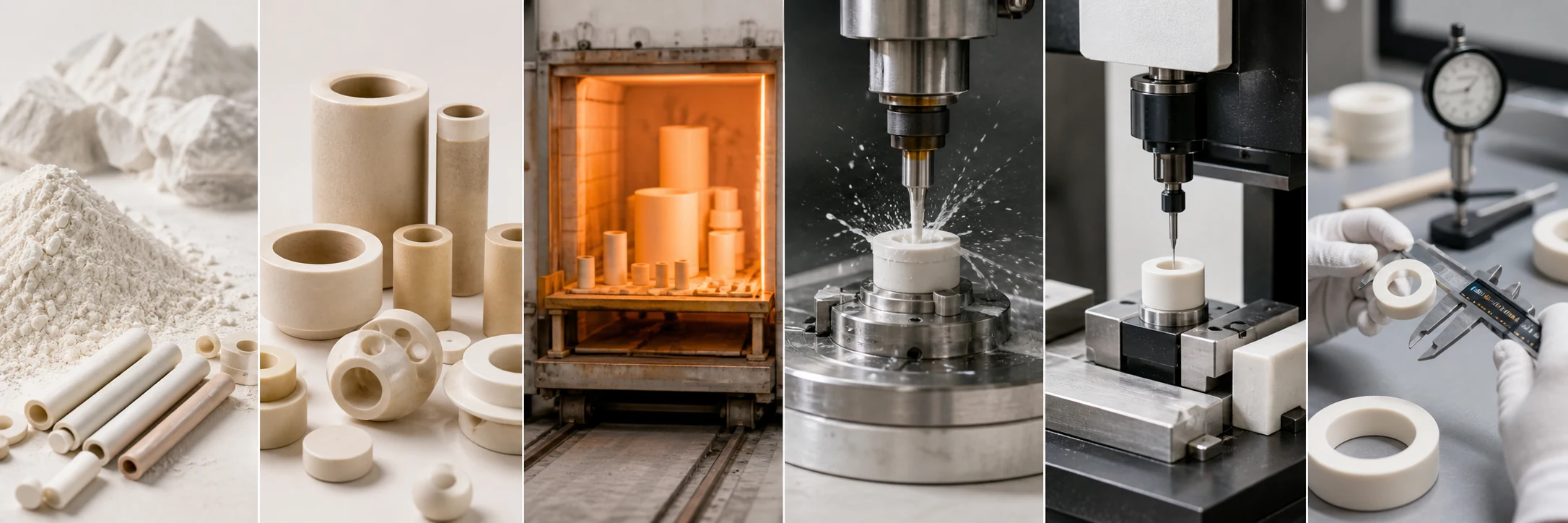
Grade and powder preparation.
Pressing, extrusion or casting.
Controlled densification and shrinkage.
Green or hard machining.
Grinding, lapping or polishing.
Dimensions, surface and function.
Protection and traceability.
Engineered for Environments Where Metals or Polymers Struggle
Industry pages should connect operating conditions to material decisions, component designs and inspection requirements.
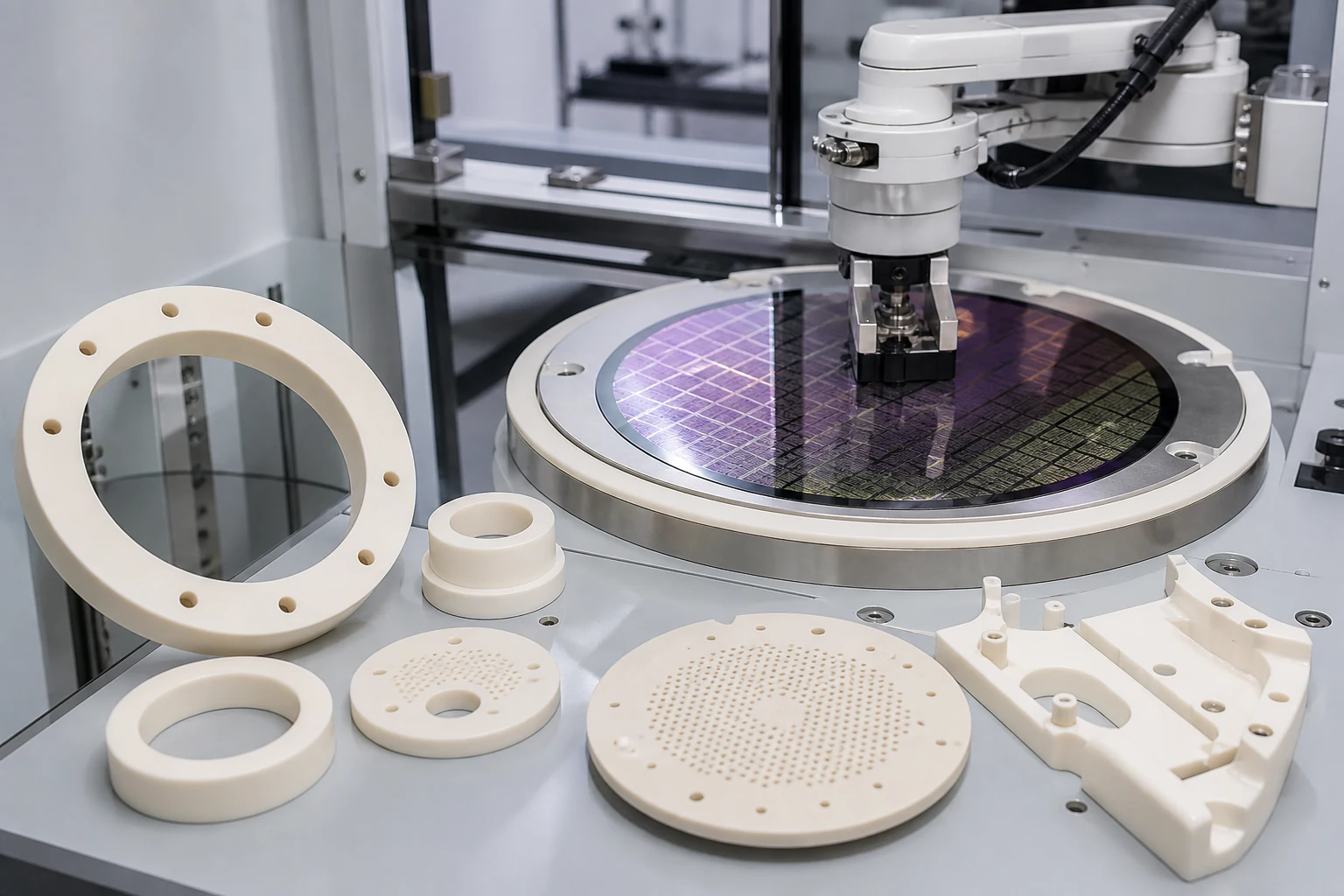
Semiconductor
Insulation, thermal management and process components.
Medical Equipment
Wear, cleanliness and precision for equipment components.
Automotive & E-Mobility
Insulation, sensors, wear parts and power electronics.
Fluid Handling
Plungers, pistons, valves, seals and dosing components.
Chemical Processing
Corrosion and temperature resistance for aggressive media.
Oil & Gas
Wear and erosion control in demanding service conditions.
Electronics
Electrical insulation and thermal dissipation.
Industrial Machinery
Long-life precision parts for abrasive or hot processes.
Use a Comparison to Shortlist—Then Validate the Application
These are positioning-level comparisons for navigation. Final values and guarantees must come from the confirmed grade datasheet.
| Material | Wear Resistance | Fracture Toughness | Thermal Conductivity | Electrical Insulation | Thermal Shock | Relative Cost | Typical Use |
|---|---|---|---|---|---|---|---|
| Alumina | High | Medium-Low | Medium | Excellent | Medium | Balanced | General precision, wear and insulation |
| Zirconia | High | High | Low | Good | Medium | Higher | Plungers, sleeves, valves, wear parts |
| Aluminum Nitride | Medium | Medium | Very High | Excellent | Good | Higher | Power electronics and thermal management |
| Silicon Nitride | Very High | High | High | Excellent | Excellent | Higher | High-load and thermal cycling applications |
| Boron Nitride | Application-dependent | Low-Medium | High | Excellent | Excellent | Higher | Vacuum, molten metal and furnace use |
Direct Buyers to High-Intent Product Paths
Each solution page should answer fit, limits, required data, inspection and project-start questions—not just show a product gallery.
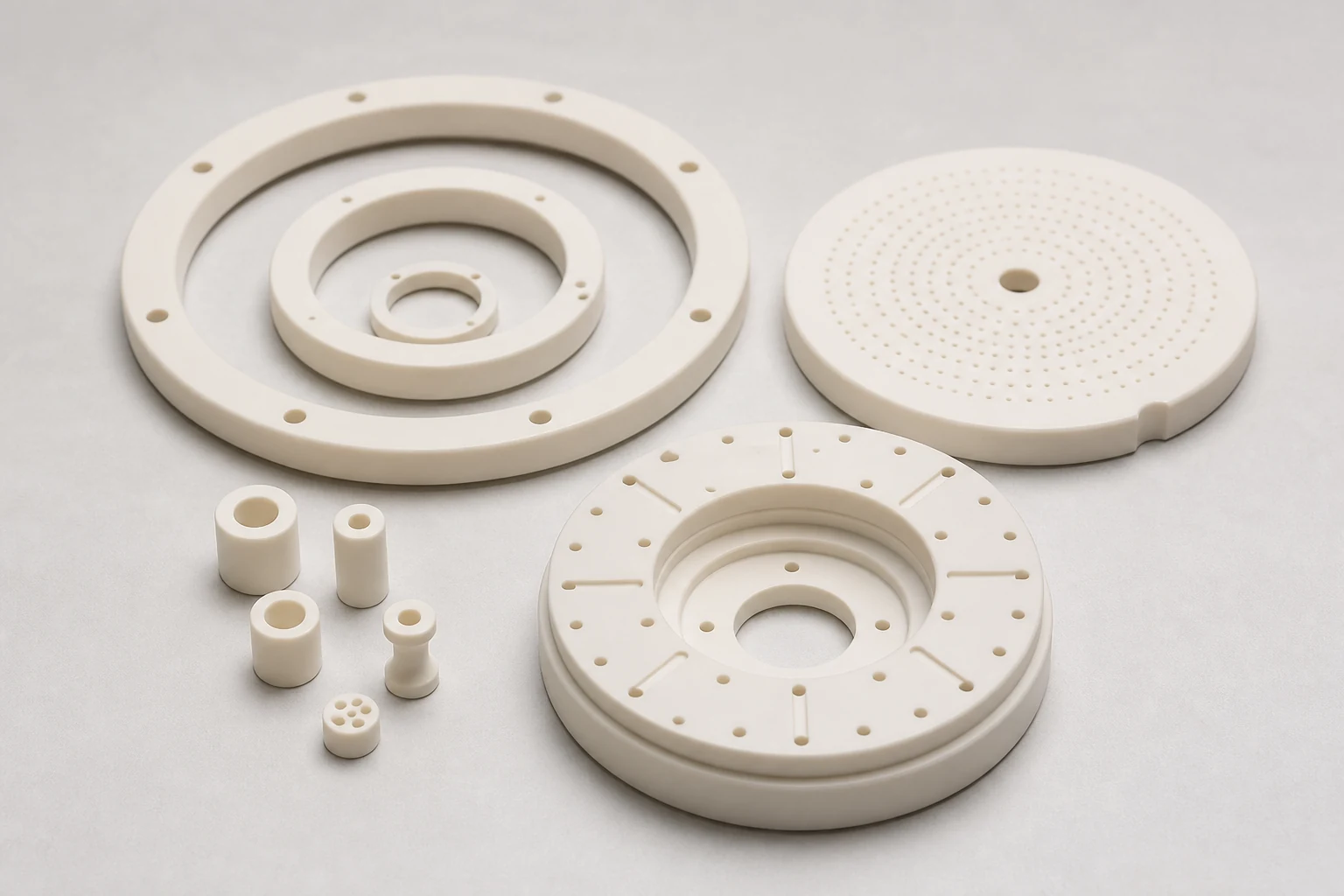
Semiconductor Ceramic Components
Materials and precision components for insulation, vacuum, heat and process control.
View Solution →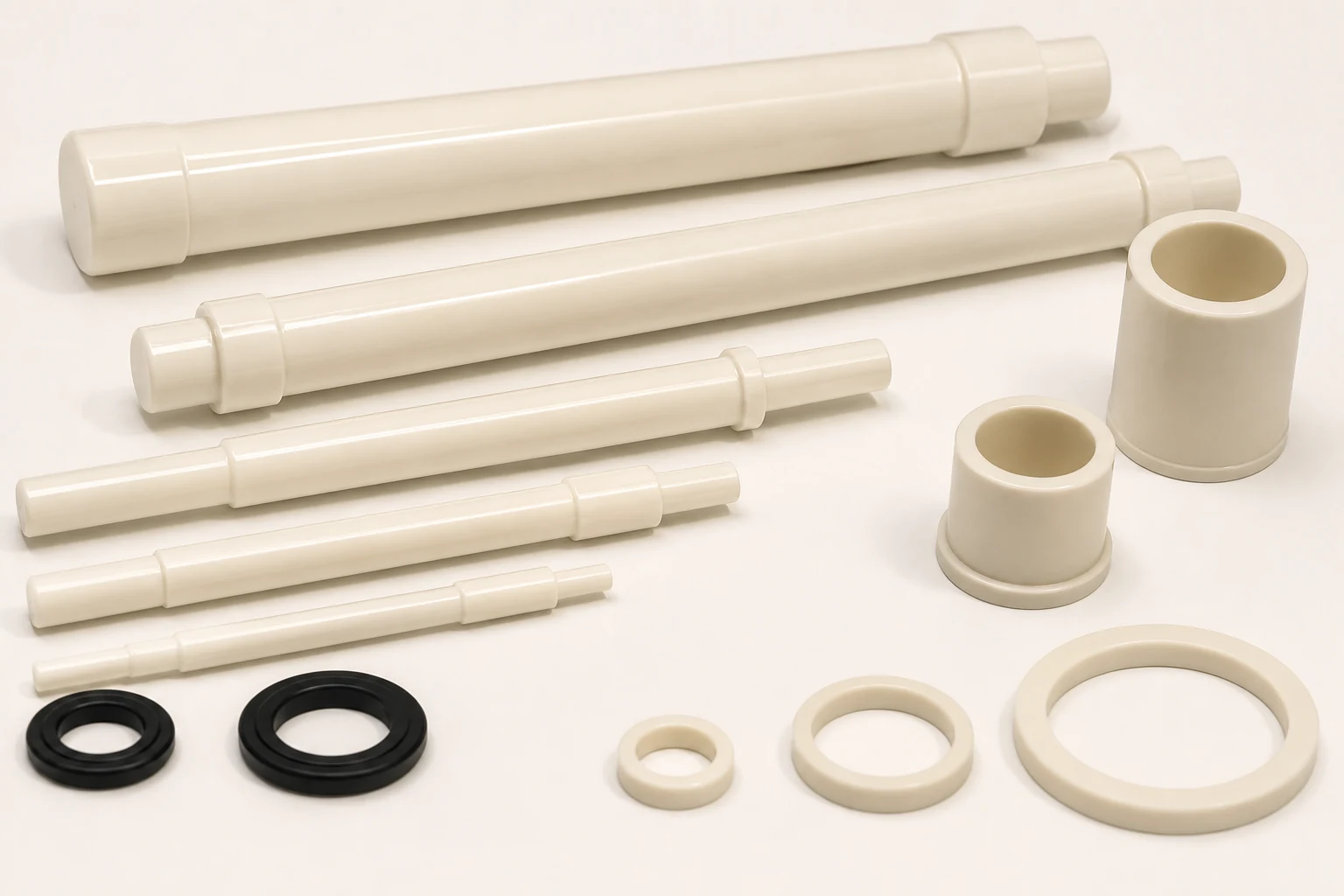
Ceramic Pump Plungers
Wear-resistant plunger options for dosing, filling and high-cycle pump systems.
View Solution →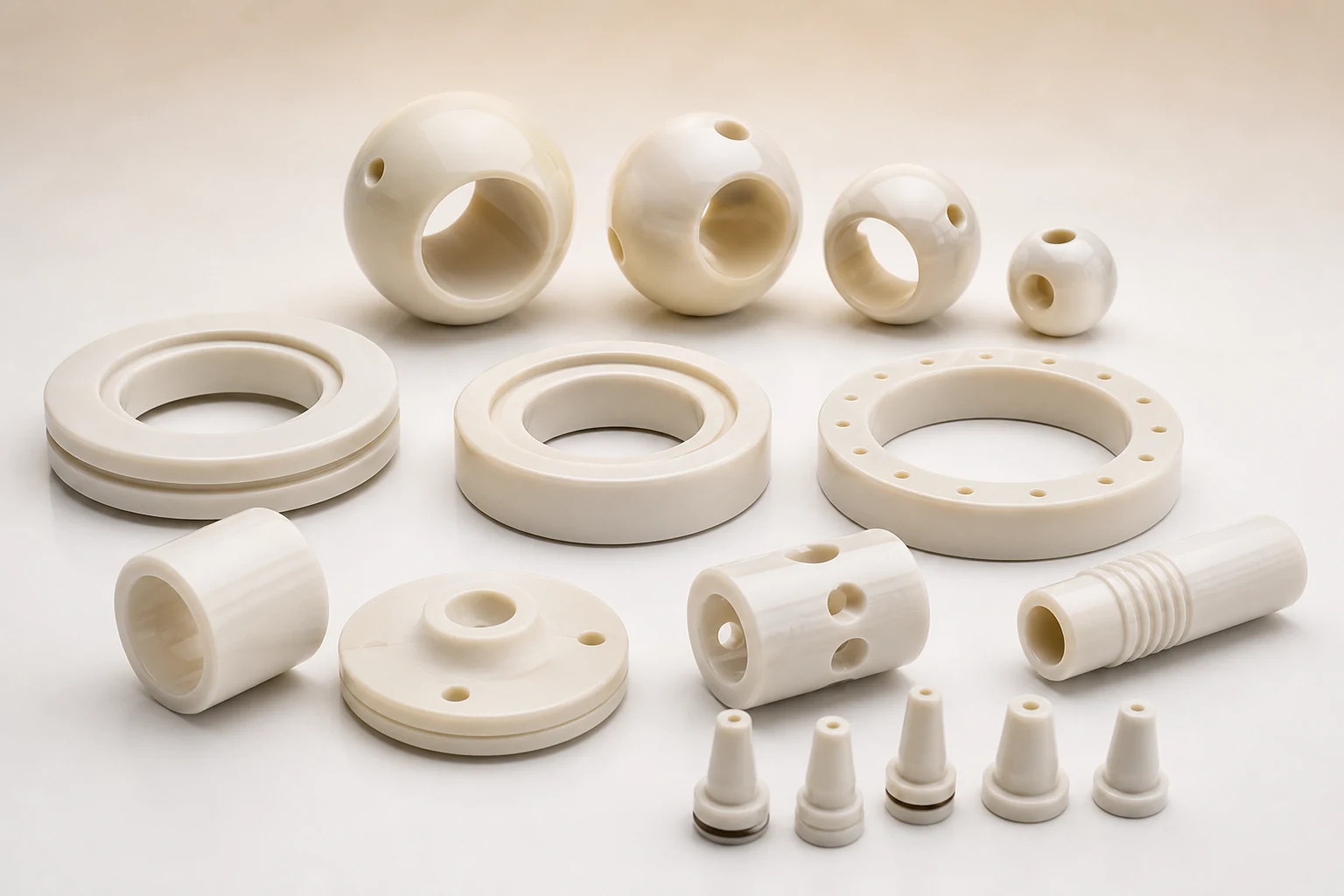
Ceramic Valve Components
Valve balls, seats, sleeves and sealing components for abrasive or corrosive fluids.
View Solution →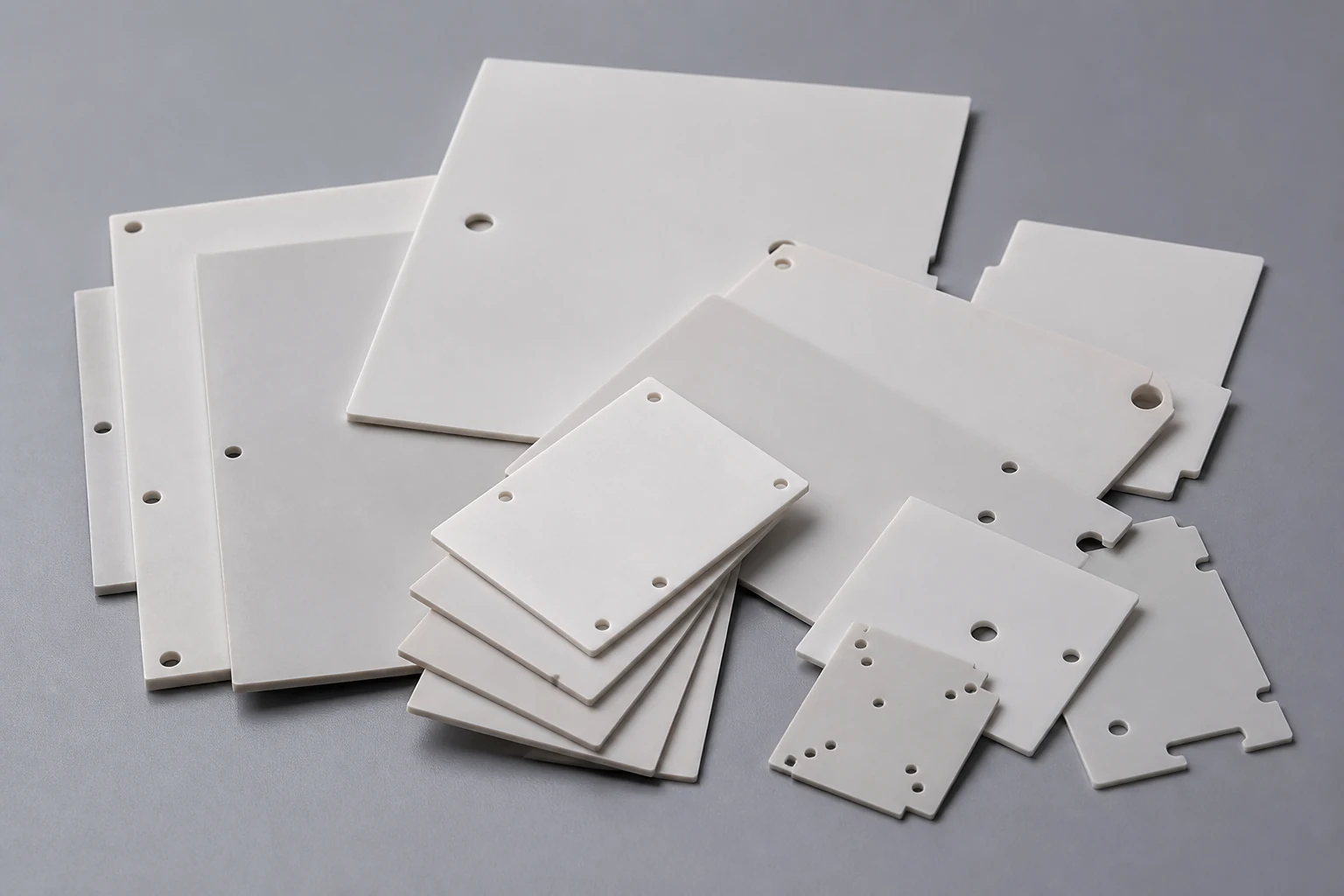
Aluminum Nitride Substrates
Electrically insulating substrates for high heat-flux electronics.
View Solution →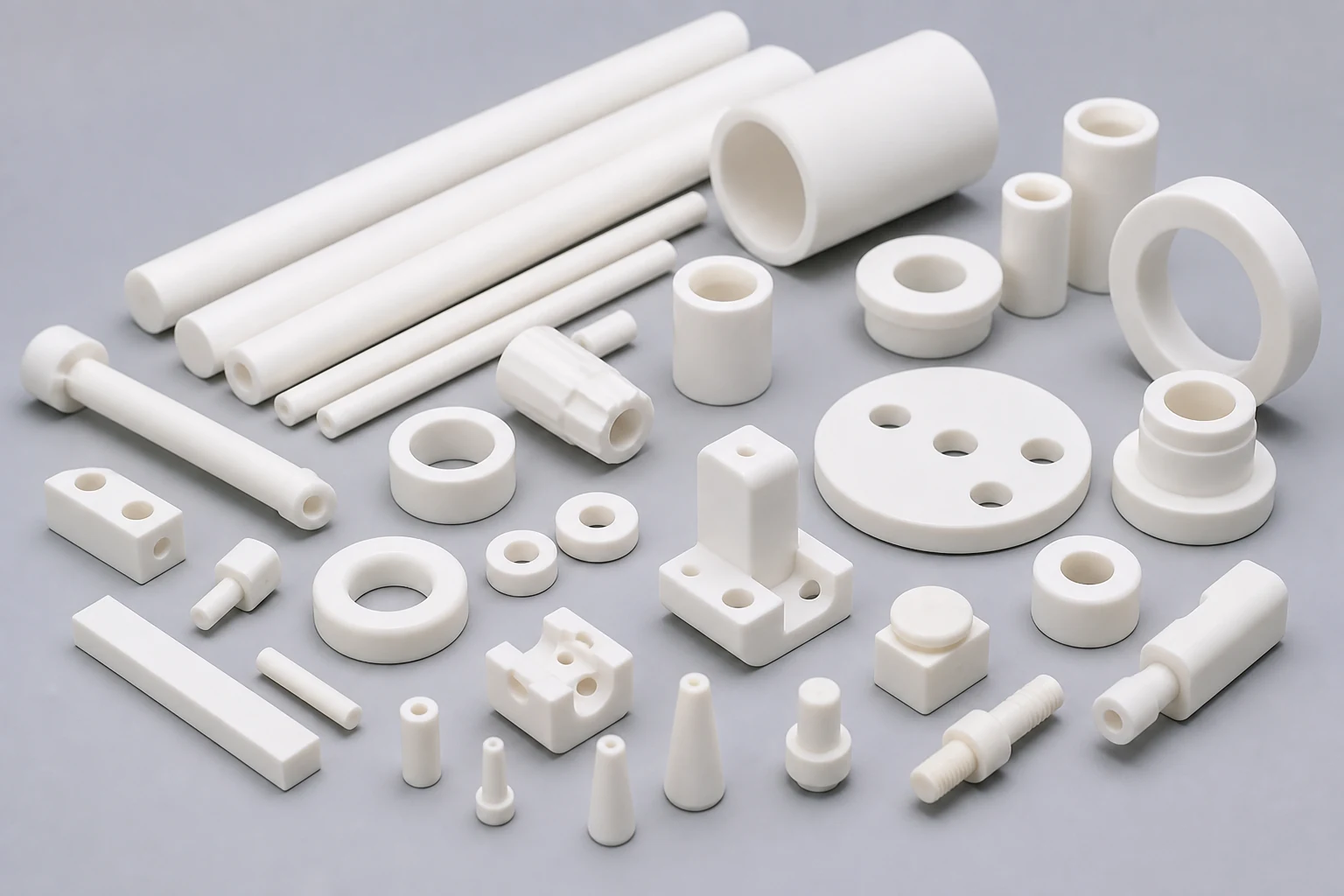
Precision Alumina Components
Cost-effective technical ceramic parts for insulation, wear and temperature.
View Solution →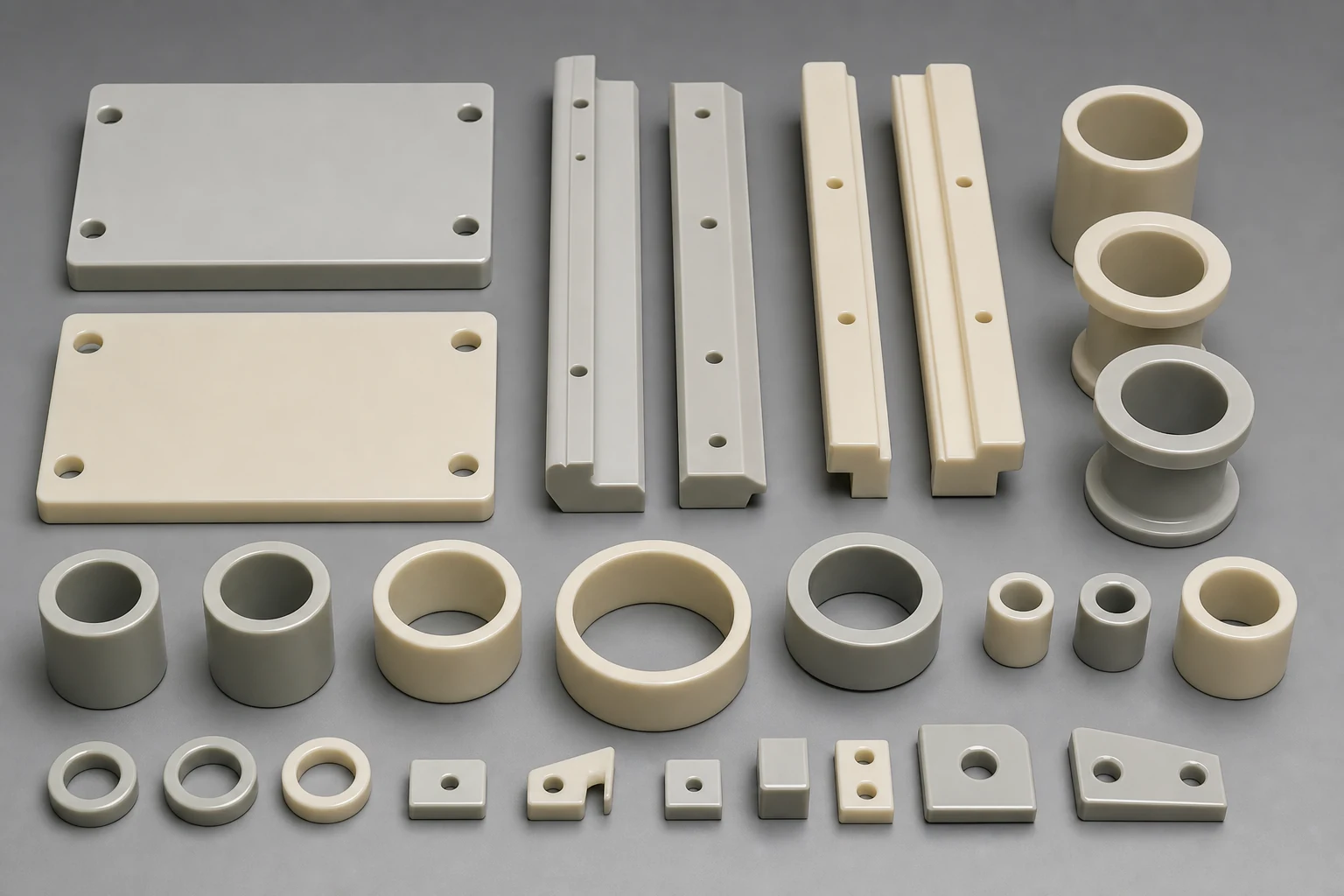
Zirconia Wear Components
High-toughness parts for sliding, impact-sensitive and fine-finish applications.
View Solution →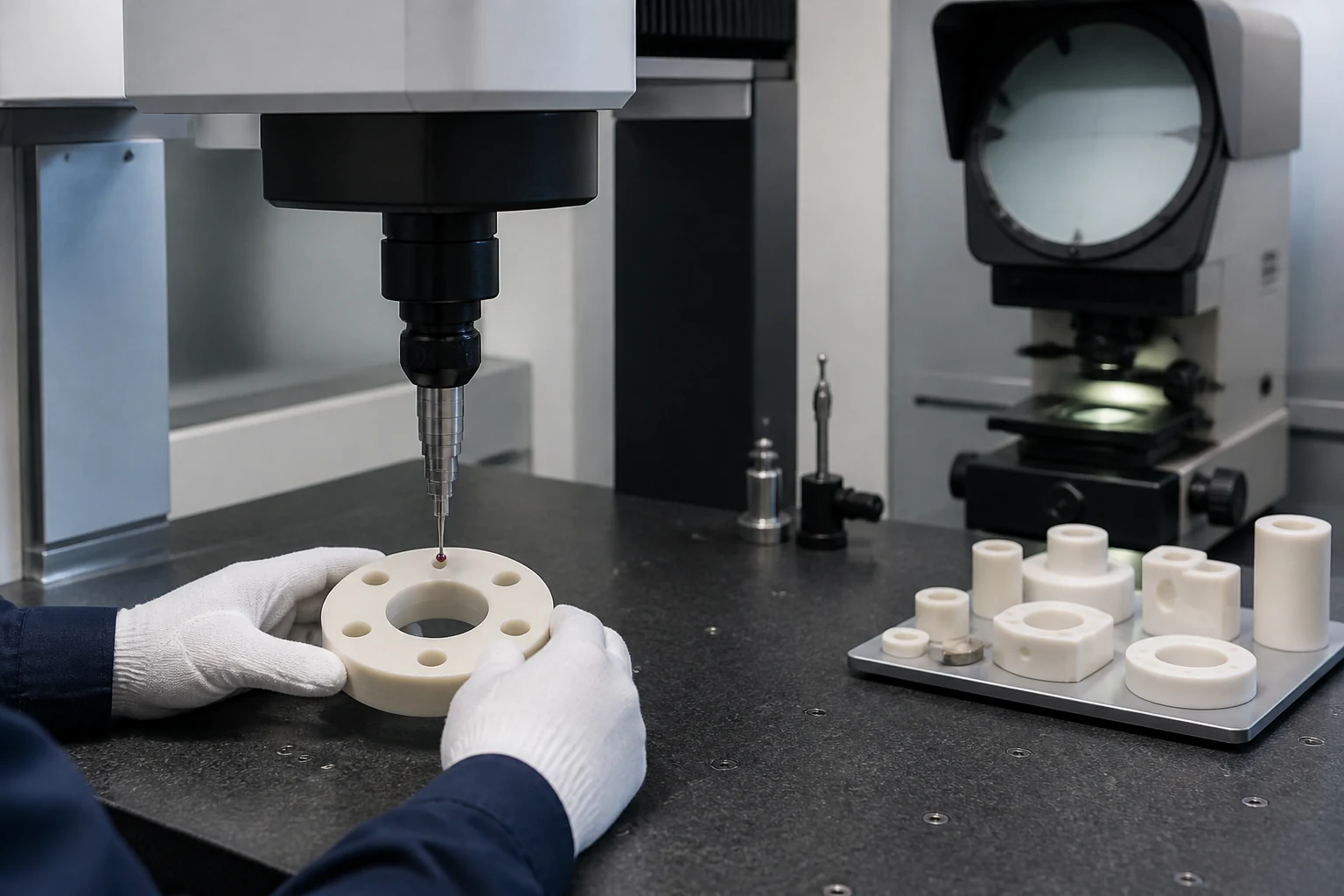
Define the Acceptance Method Before Production Starts
A dimension on a drawing is not enough. Inspection method, datum strategy, surface requirement and reporting scope should be agreed during quotation.
A Clear Project Path Reduces Rework
Buyers should know exactly what happens after they send a drawing and what information is needed at each decision point.
Show the Decision, Not Just the Finished Part
The following cards demonstrate the planned layout. Final case claims, performance data and customer information must be approved before publication.
Semiconductor Process Component
Problem → operating condition → material decision → manufacturing challenge → inspection method.
Pump Plunger Wear Upgrade
Explain why the original material failed and how ceramic selection changes service risk.
Thermal Management Substrate
Connect heat load, insulation, flatness, surface and inspection requirements.
Content That Helps Engineers Make Better Decisions
Resources should answer material trade-offs, tolerance limits, design risks and quotation requirements—topics buyers need before contacting a supplier.
How to Select an Advanced Ceramic Material
A decision framework based on wear, heat, insulation, corrosion, impact and cost.
Alumina vs Zirconia: Which One Fits Your Part?
Choose alumina for balanced cost and insulation; choose zirconia when toughness is the priority.
Ceramic Tolerance and DFM Guide
Where tolerances add real function—and where they only add grinding cost and risk.
Common Questions Before a Ceramic Project Starts
Have a Ceramic Component That Needs Engineering Review?
Send your drawing, material requirement or operating conditions. The next step is to evaluate material fit, manufacturability, tolerance risks and the practical production route.