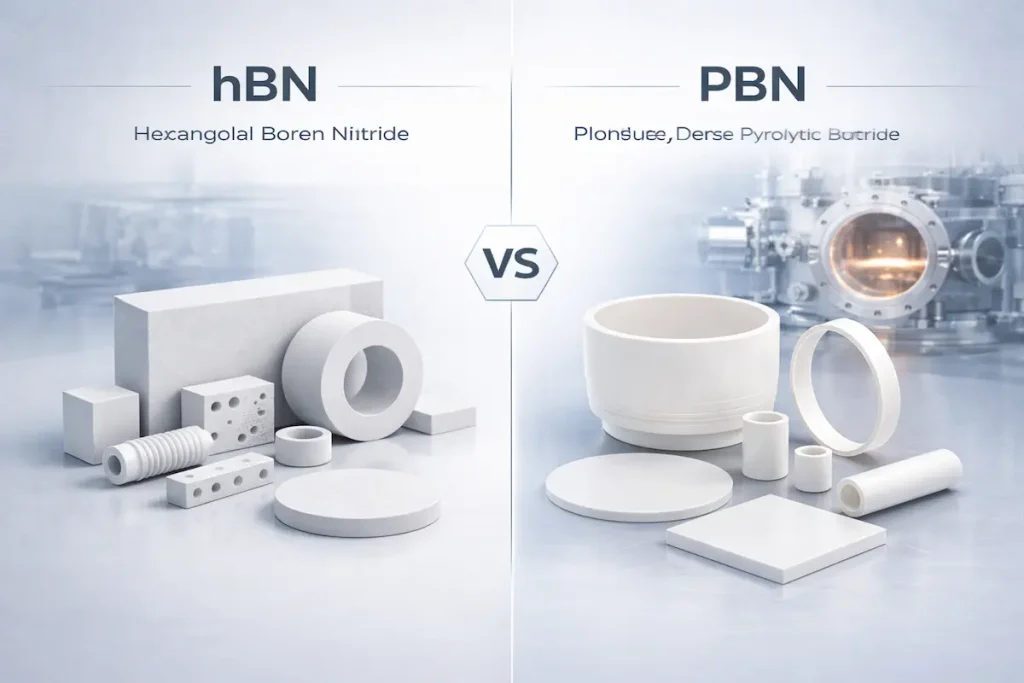
Hexagonal Boron Nitride vs Pyrolytic Boron Nitride
Quick Answer: The main difference between hexagonal boron nitride (hBN) and pyrolytic boron nitride (PBN) is not just the raw material name, but the manufacturing
Quick Answer: The main difference between hexagonal boron nitride (hBN) and pyrolytic boron nitride (PBN) is not just the raw material name, but the manufacturing

Quick Summary: Ceramic parts are engineered components made from technical ceramic materials to deliver heat resistance, electrical insulation, wear resistance, and dimensional stability in demanding
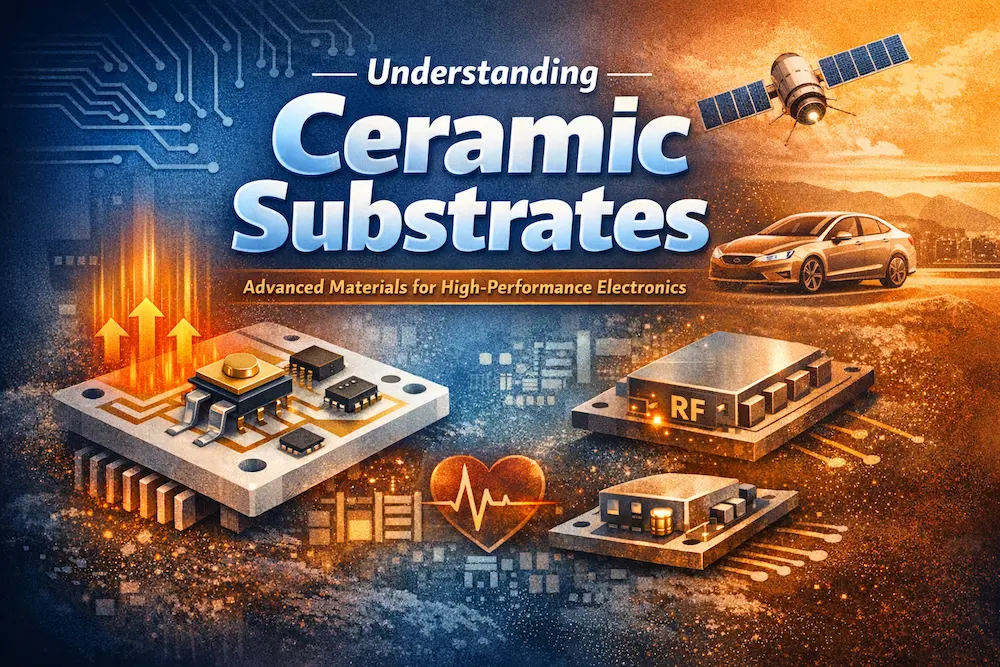
Quick Summary: A ceramic substrate is a flat engineered ceramic base used to support, insulate, and thermally manage electronic circuits, power devices, sensors, and high-reliability