Custom Alumina
Ceramic Tubes
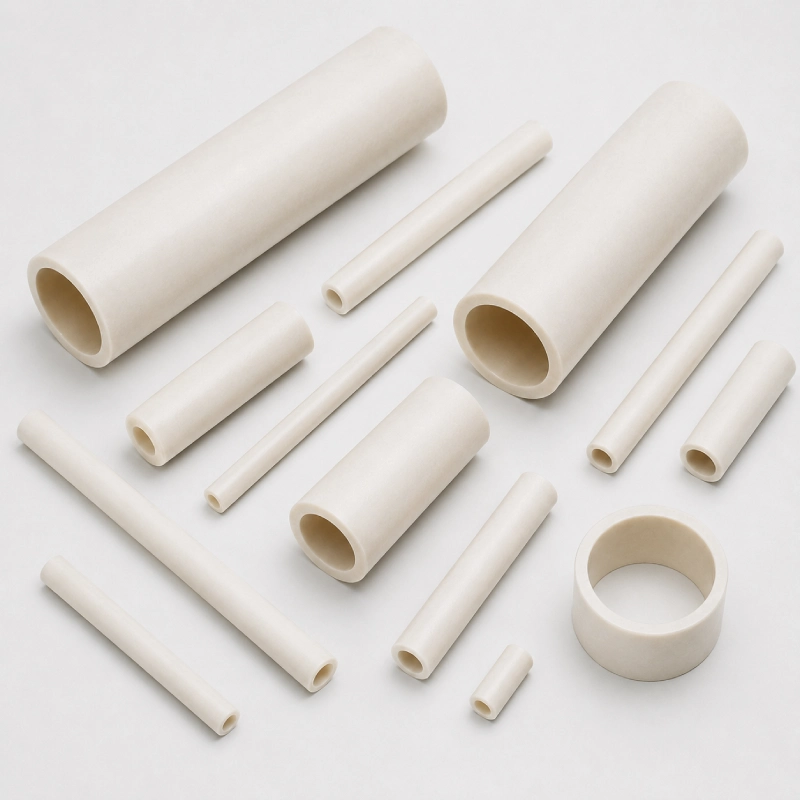
Precision ceramic tubes engineered for electrical insulation, thermal stability, wear resistance and demanding industrial environments. Available from prototype quantities through repeat production.
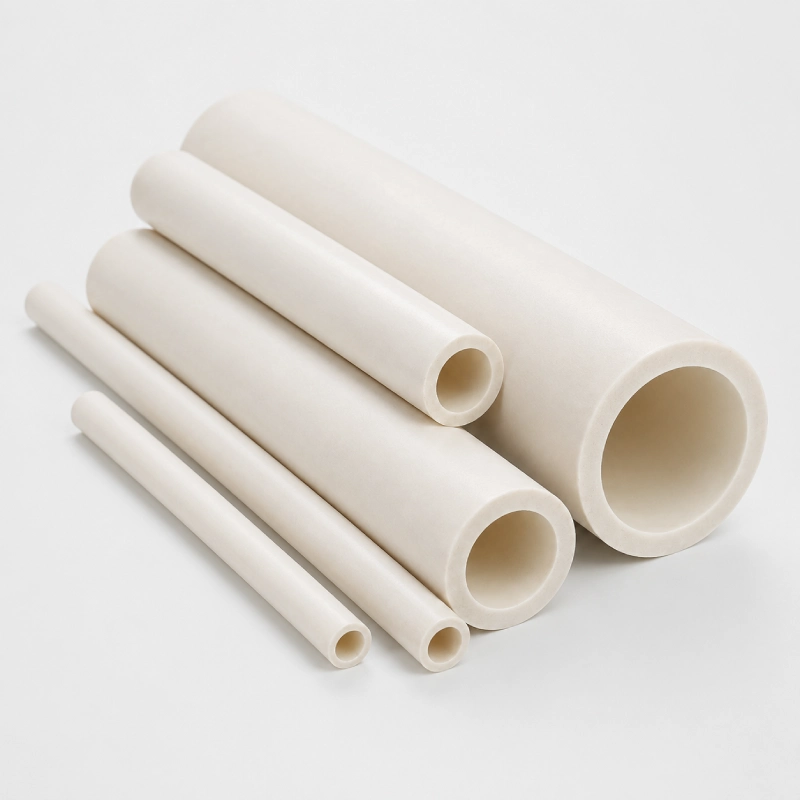
Custom Ceramic Tubes Built to Your Drawing.
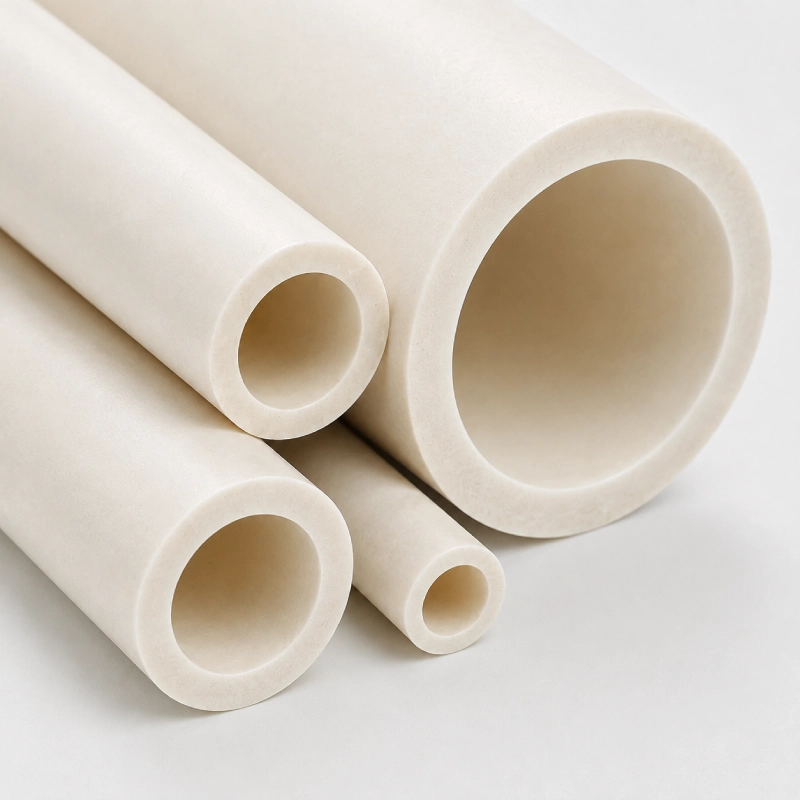
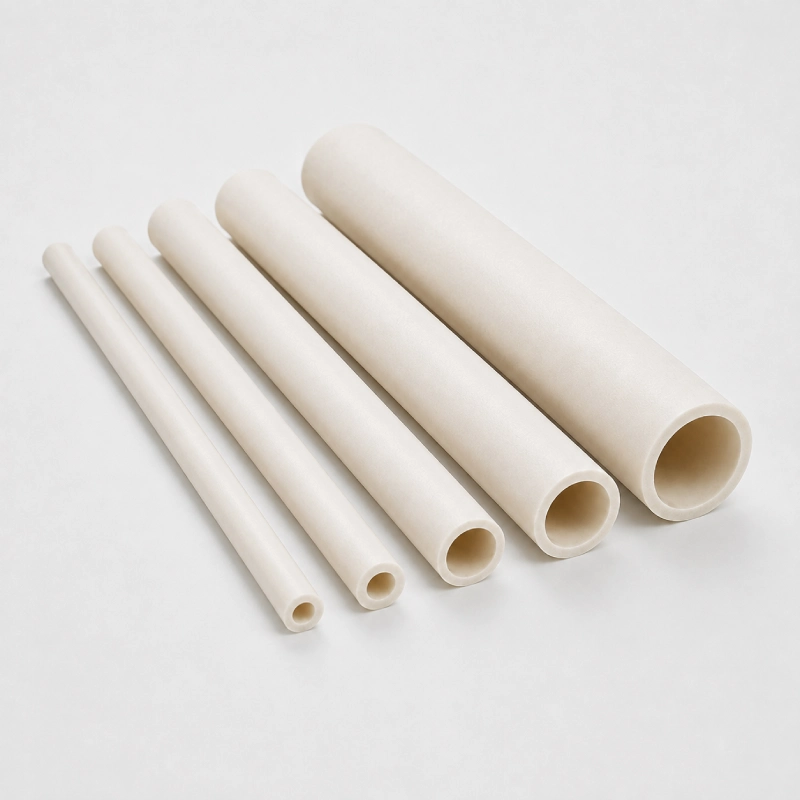
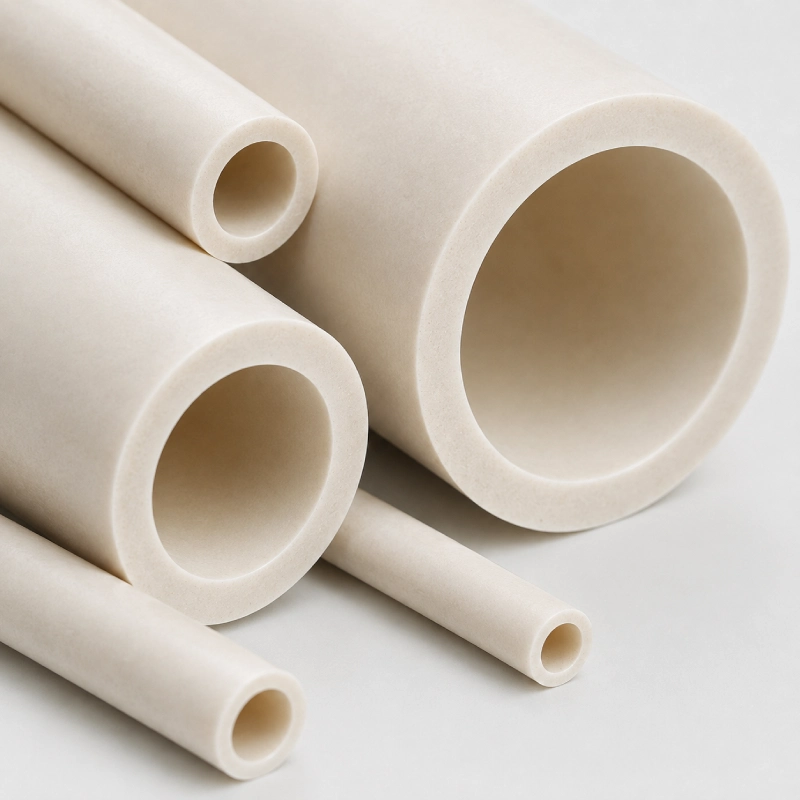
UNIPRETEC supplies alumina ceramic tubes in custom diameters, lengths, wall thicknesses and material grades for demanding industrial applications.
Custom Dimensions
OD, ID, length, wall thickness and end geometry can be produced to drawing.
Precision Finishing
As-fired and precision-ground options are available for functional dimensions.
Multiple Alumina Grades
Select 95%–99.8% alumina according to insulation, temperature, wear and purity requirements.
Electrical insulation, furnace protection, wear sleeves and process equipment.
Severe impact, extreme thermal shock or unusually thin long-wall designs.
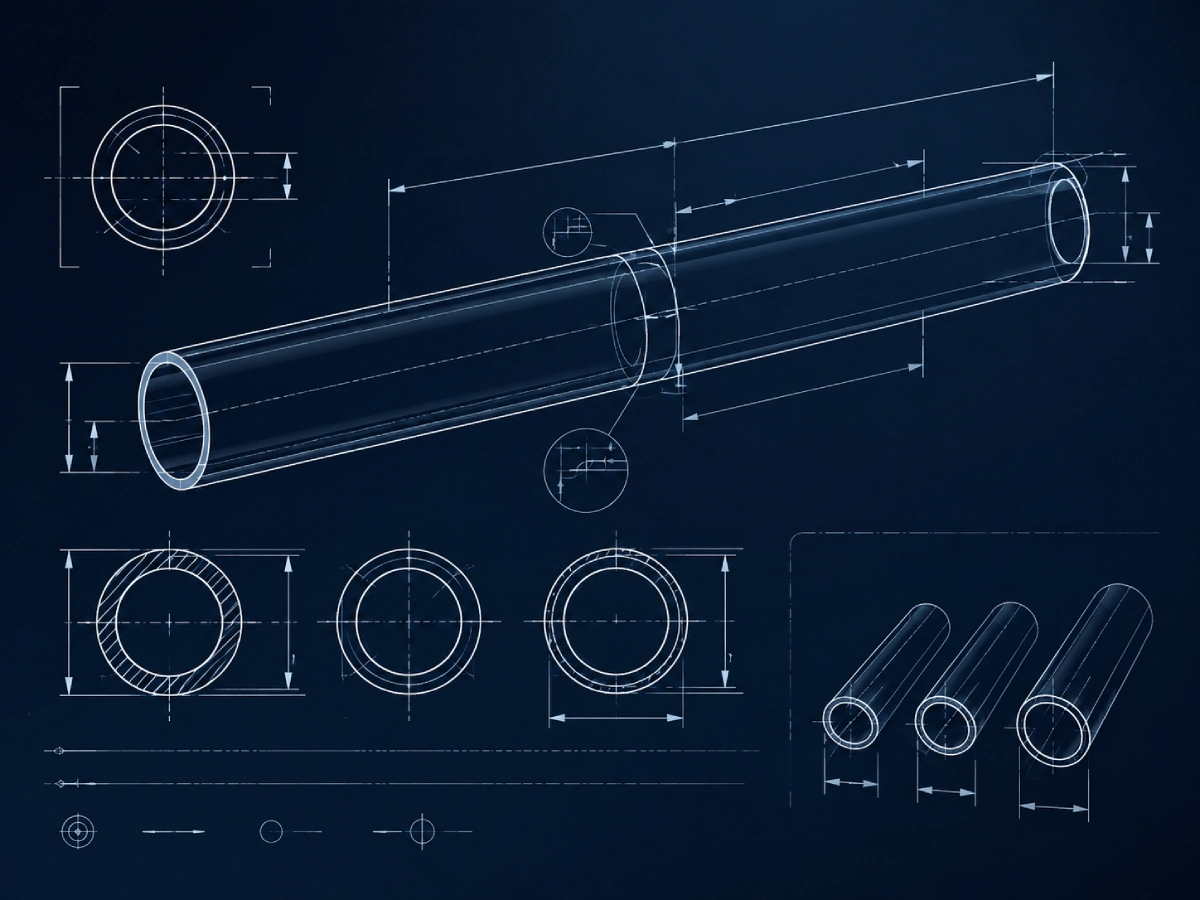
Technical specifications that support an informed RFQ.
Use verified factory data here. The values below are deliberately presented as preview content rather than guaranteed production limits.
| Property | 95% Alumina | 99% Alumina | 99.5% Alumina | Unit | Use in selection |
|---|---|---|---|---|---|
| Alumina content | 95 | 99 | 99.5 | % | Purity / cost balance |
| Density | Typical value | Typical value | Typical value | g/cm³ | Material verification |
| Flexural strength | Typical value | Typical value | Typical value | MPa | Mechanical loading |
| Thermal conductivity | Typical value | Typical value | Typical value | W/m·K | Heat transfer behaviour |
| Dielectric strength | Typical value | Typical value | Typical value | kV/mm | Electrical insulation |
| Maximum use temperature | Application review | Application review | Application review | °C | Environment dependent |
| Feature | As-fired route | Ground route | Key dependency | Drawing note |
|---|---|---|---|---|
| Outside diameter | General tolerance | Precision available | Diameter and length | Identify datum |
| Inside diameter | General tolerance | Tool access dependent | Bore and depth | Define functional surface |
| Length | Cut / fired route | End grinding available | Section and straightness | State end squareness |
| Concentricity | Process dependent | Engineering review | OD / ID control route | Define controlled diameter |
| Surface roughness | As-fired texture | Ground / lapped | Accessible surface | Specify only where functional |
| Operation | Availability | Typical purpose | Review point |
|---|---|---|---|
| OD precision grinding | Available | Diameter, roundness, surface control | Length-to-diameter ratio |
| ID grinding | Geometry dependent | Bore fit and concentricity | Tool access and bore depth |
| Lapping / polishing | Selected faces | Seal, friction, cleanliness | Flatness and surface target |
| Chamfer / radius | Available | Edge protection and assembly | Minimum feature size |
| Dimensional inspection | Available | FAI or batch reporting | Agreed CTQ dimensions |
Choose alumina purity by performance and process requirements.
Higher purity is not automatically the best option. Select the grade that meets the actual electrical, thermal, chemical, cleanliness and commercial target.
Balanced route for many industrial insulation and wear applications where ultra-high purity is not necessary.
- Cost positionLower
- Typical focusIndustrial duty
- Selection noteValue-driven
Improved purity for applications requiring a stronger balance of dielectric, cleanliness and temperature performance.
- Cost positionMedium
- Typical focusElectrical / thermal
- Selection noteBalanced purity
A common engineering choice when high purity, dimensional finishing and demanding process conditions must be combined.
- Cost positionMedium–high
- Typical focusPrecision systems
- Selection noteRecommended start
For applications where purity, contamination control or demanding electrical and thermal requirements justify the premium.
- Cost positionHighest
- Typical focusCritical purity
- Selection noteUse when justified
99.5% Alumina is selected in this preview. In production, this choice can prefill the engineering RFQ.
Use Selected Grade
Define the component by function, datum and critical dimensions.
A clear drawing allows engineering to separate economical as-fired dimensions from features that genuinely need secondary grinding or inspection reporting.
Where Alumina Ceramic Tubes Perform Best.
From electrical isolation to heat protection and chemical-process equipment, alumina ceramic tubes can be engineered around the operating environment, required purity and dimensional demands.
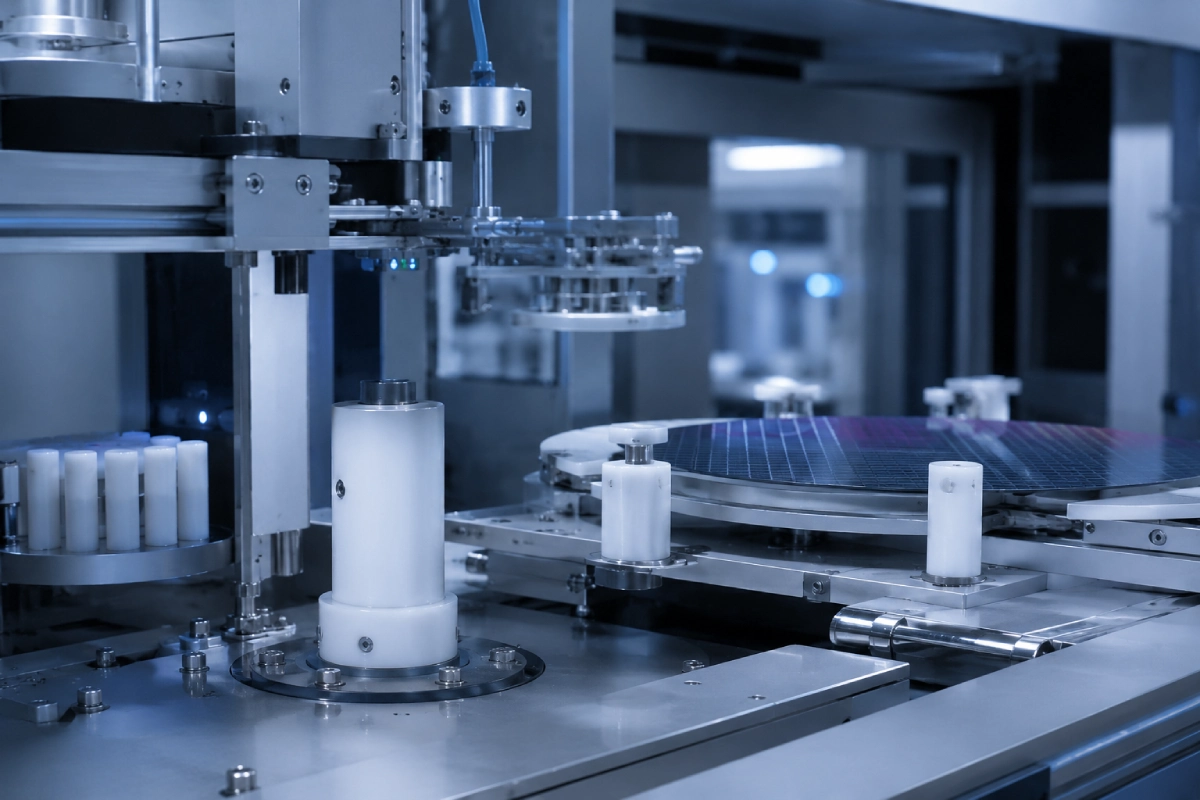
Semiconductor Equipment
Alumina ceramic tubes provide electrically insulating and dimensionally stable interfaces for precision semiconductor and automated processing equipment.
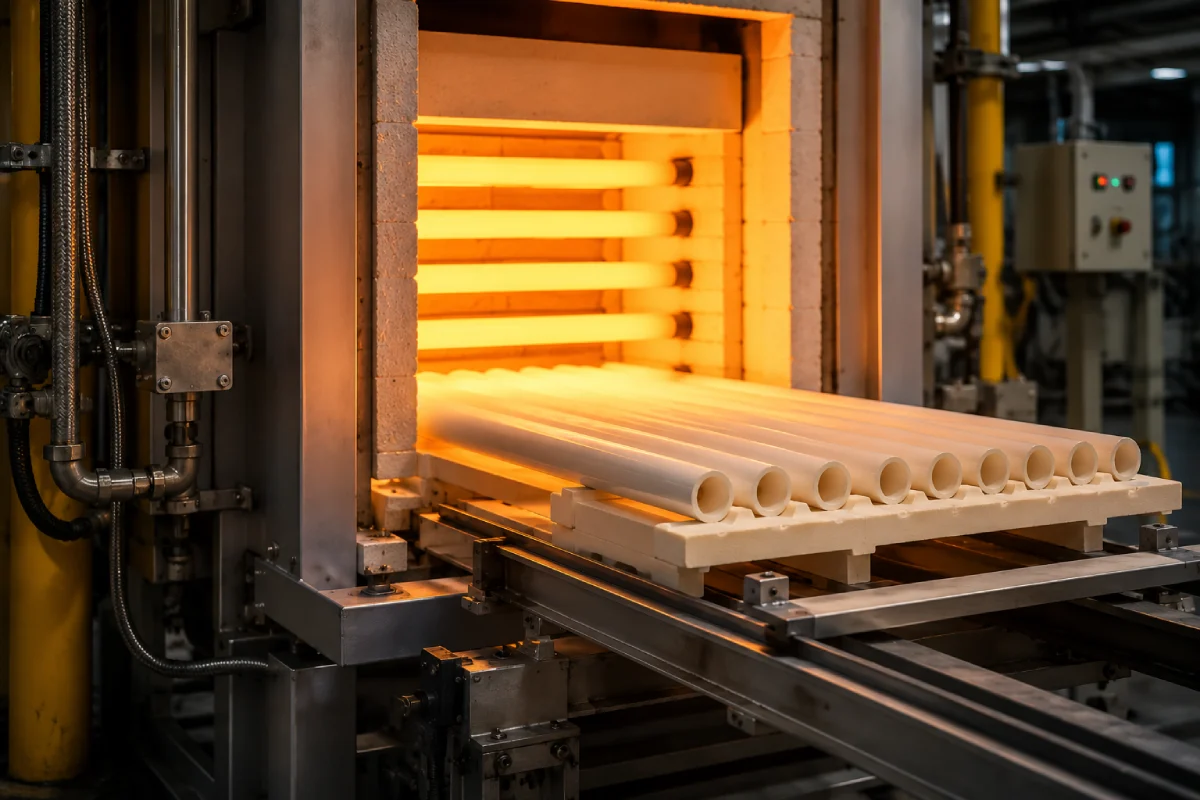
High-Temperature Protection
Ceramic tubes can be used as protective and insulating components around equipment exposed to elevated temperatures and controlled furnace environments.
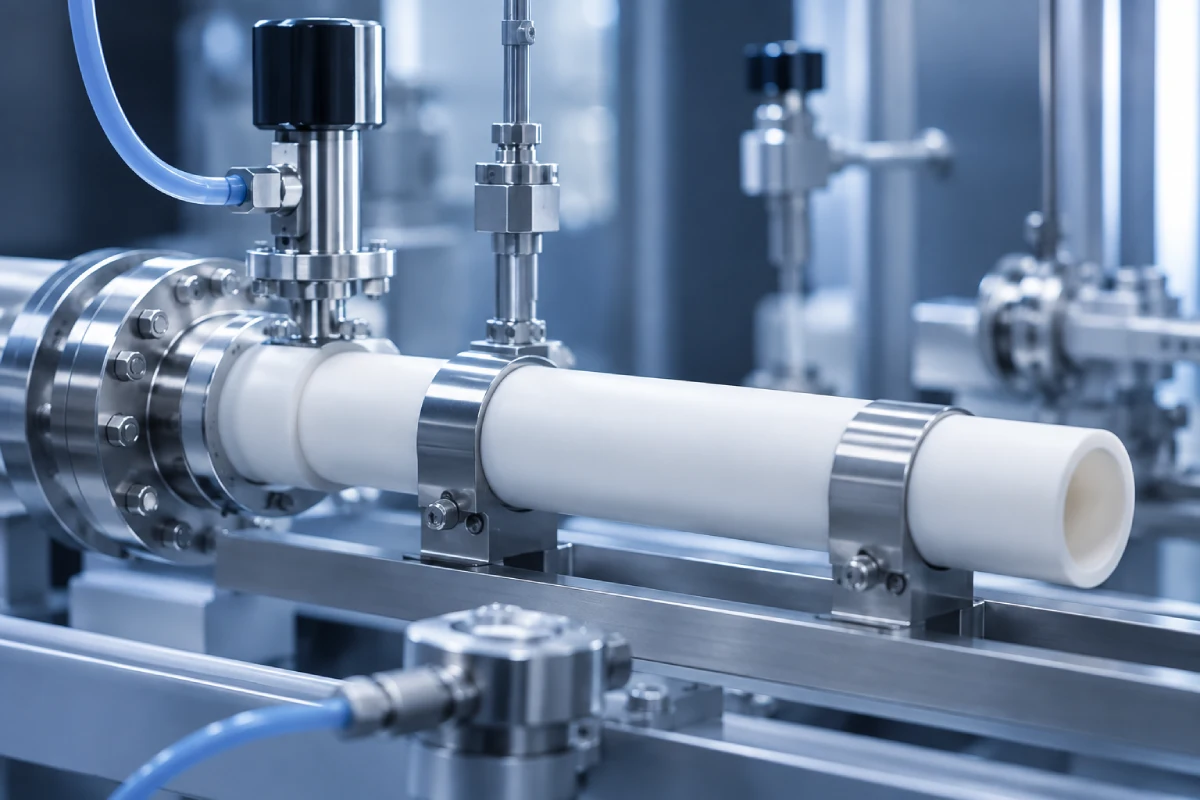
Fluid & Chemical Handling
Alumina ceramic tubes can serve as wear-resistant and chemically stable interfaces in pumps, dosing systems, sensors and process equipment.
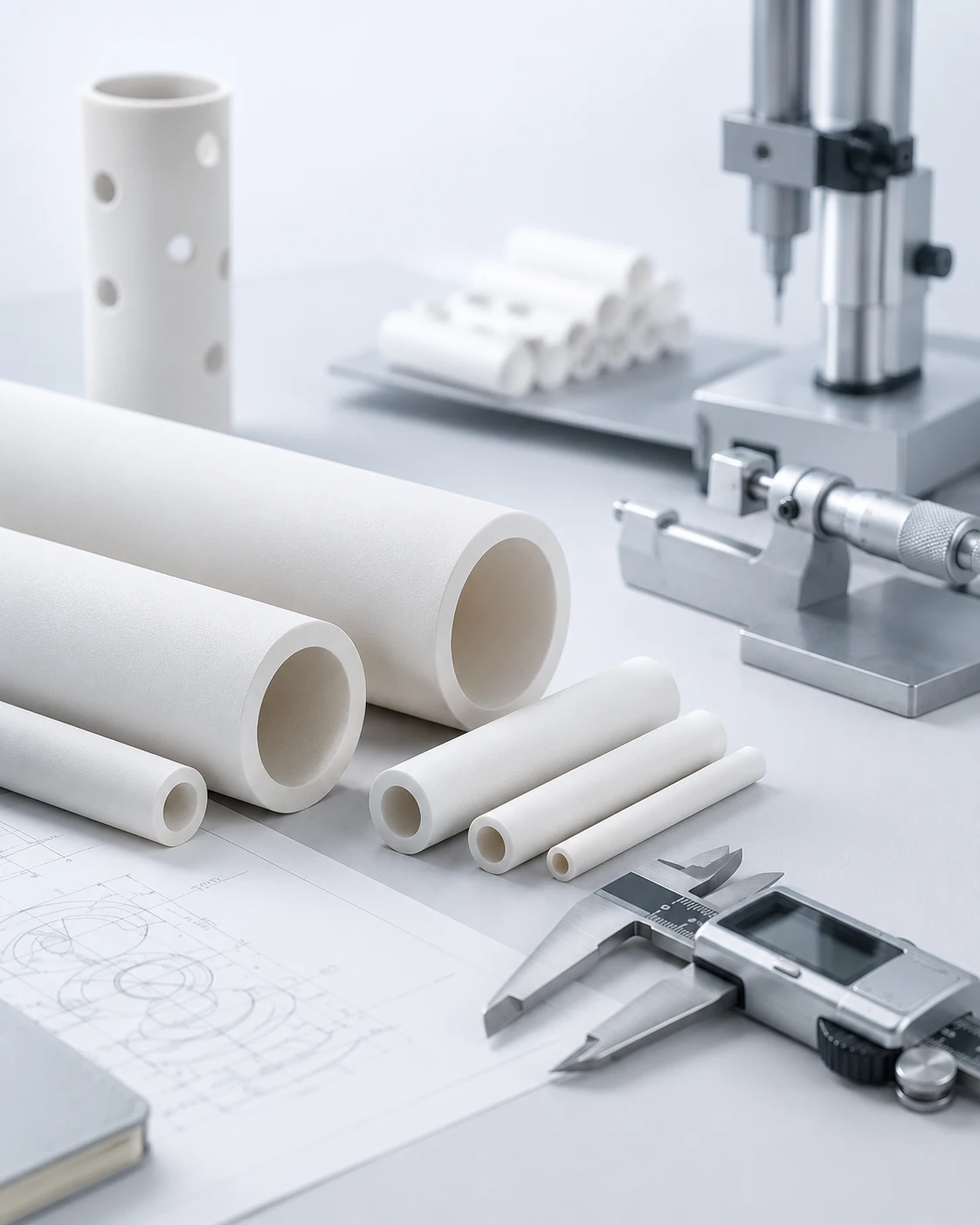
From forming to final inspection.
Keep this section visual and credible. Replace each step with real factory photography when available.
Material Preparation
Grade, powder route and batch controls are established.
Forming
The component route is selected around shape and quantity.
Green Machining
Features are created before firing where technically sensible.
Sintering & Grinding
Critical dimensions are finished after sintering as required.
Inspection & Packing
Agreed CTQ dimensions, documentation and packaging are completed.
Quality Inspection for Critical Ceramic Tube Dimensions.
Critical dimensions can be defined from your drawing and verified according to the agreed inspection scope before shipment.
Questions engineers usually ask before quotation.
The correct grade depends on electrical, thermal, chemical, mechanical, cleanliness and cost requirements. Higher purity should be specified only when the application justifies it.
OD grinding is generally more accessible. ID grinding depends on bore diameter, depth, wall thickness, length and tooling access. The drawing should define which diameter controls concentricity.
Identify the assembly datum, mating diameters, sealing or electrical surfaces, straightness requirement and any dimension that directly affects function. Avoid tight tolerances on non-functional features.
Provide a drawing or dimensioned sketch, material preference, critical tolerances, surface finish, operating conditions, prototype quantity, annual volume and inspection requirement.
Prototype or pilot quantities can be planned subject to forming route, tooling, material and finishing requirements. State whether the prototype is intended for dimensional approval, application testing or production validation.
Send Your Drawing for Ceramic Tube Evaluation
Share your drawing or application requirements. Our engineers will review material selection, dimensions and manufacturing feasibility.