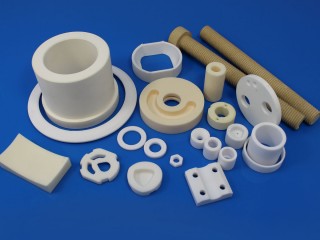
Alumina – Al₂O₃
Alumina, also known as Aluminium Oxide, is a hard wearing advanced technical ceramic material frequently used in a wide variety of industrial applications.

Do you have any questions? Email Us sales@Boruiceramic.com
Technical ceramic materials have the ability to make products lighter, more efficient, longer lasting, reduce maintenance intervals, and reduce operating costs.
They are frequently being used to replace metals, polymers, and refractory materials in a wide variety of applications due to their notable high temperature capability, hardness, and electrical properties.
Precision Ceramics offers a wide range of advanced technical ceramic materials to ensure that we have the right material for your application.

Alumina, also known as Aluminium Oxide, is a hard wearing advanced technical ceramic material frequently used in a wide variety of industrial applications.
Not sure which ceramic material is right for your application? Learn more about technical ceramics, check out our ceramic materials comparison chart, or contact us and we’ll be more than happy to help out.

Aluminium Nitride (AlN) is an excellent material to use if high thermal conductivity and electrical insulation properties are required --

Aluminium Nitride (AlN) is an excellent material to use if high thermal conductivity and electrical insulation properties are required --
Aluminium Nitride (AlN) is an excellent material to use if high thermal conductivity and electrical insulation properties are required --

Aluminium Nitride (AlN) is an excellent material to use if high thermal conductivity and electrical insulation properties are required --

Aluminium Nitride (AlN) is an excellent material to use if high thermal conductivity and electrical insulation properties are required --

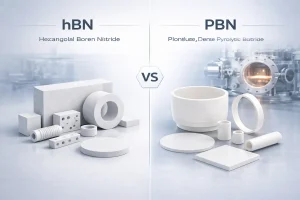
Quick Answer: The main difference between hexagonal boron nitride (hBN) and pyrolytic boron nitride (PBN) is not just the raw material name, but the manufacturing
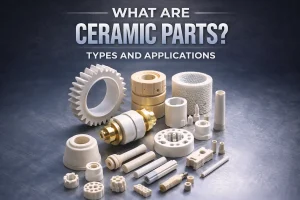
Quick Summary: Ceramic parts are engineered components made from technical ceramic materials to deliver heat resistance, electrical insulation, wear resistance, and dimensional stability in demanding
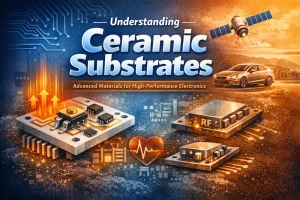
Quick Summary: A ceramic substrate is a flat engineered ceramic base used to support, insulate, and thermally manage electronic circuits, power devices, sensors, and high-reliability
Ceramics, defined by the broad definition of “inorganic solids”, are one of the main classes of materials, along with metals, polymers, and composites. There are several different types of ceramics, with technical ceramics (also known as engineered ceramics or advanced ceramics) being the group with the highest performing mechanical, electrical, and/or thermal properties. Their high performance is due in part to their extremely high purities which are most commonly metal compounds combined with oxides, carbides, or nitrides. Ceramics have the ability to increase product lifespan, increase efficiency, reduce overall maintenance costs, and improve performance.
Email: sales@Boruiceramic.com
Tel: +0086 592 558 9730
Address : 1940 E Deere Ave #100 Santa Ana, CA 92705 U.S.A.
Useful Links
About Us
Applications
Social Media
Contact Us
Inquiry
Terms & Conditions
Privacy Policy
FAQs
Main Products
Alumina (Al2O3)
Aluminum Nitride (AlN)
Boron Carbide (B4C)
Boron Nitride (BN)
Pyrolytic Boron Nitride
Ceramic Foam
Silicon Carbide (SiC)
Silicon Nitride (Si3N4)
Zirconia (ZrO2)
Featured Posts
Ceramic Material Selection Made Easy: A Buyer’s Guide to Key Properties
ZSBN Nozzles Used in Molten Metal Atomization
Boron Nitride Nanosheets Used as Protective Barriers for Metals
Diverse Classification Factors of Boron Nitride and Their Correlation with PBN, HBN, CBN, and ZSBN Variants
Top 10 Ceramic Plate Materials: The Essential Selection Guide
Find More Info
Copyright © 2004-2026 Boruiceramic, All Rights Reserved. Privacy Policy | Terms of Use | Site Map