Bearing Grade
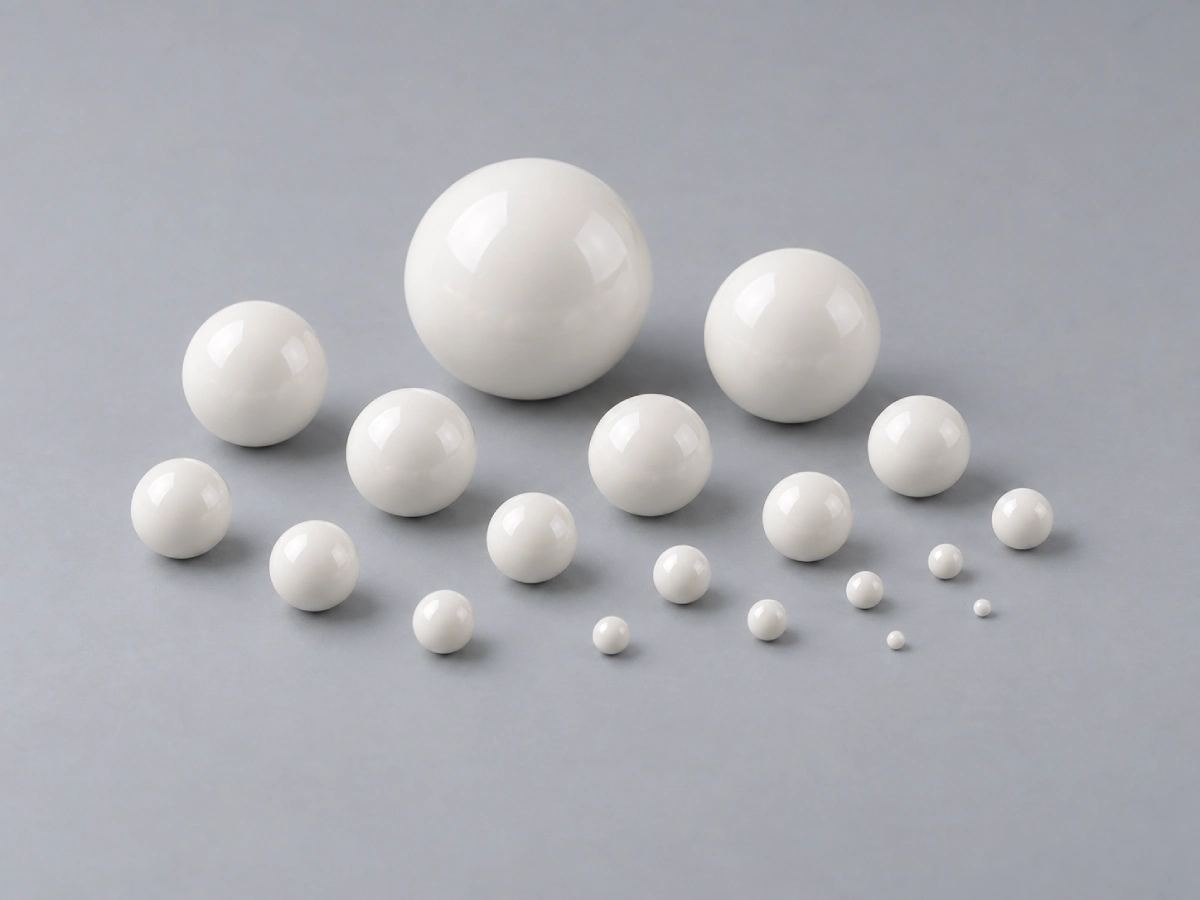
Bearing-Grade Ceramic Balls
Developed for rolling-contact systems where roundness, sphericity and surface quality support stable, low-wear performance.
View Product →Precision ceramic balls for bearing, valve, sealing, chemical, grinding and flow-control applications. Ball performance depends on material, diameter consistency, roundness, sphericity and surface integrity, especially where rolling contact or sealing reliability is critical.
Ceramic balls used in bearings, valves and milling systems work under very different conditions. The correct ball should be selected around contact mode, load, speed, media and service-life target.
For rolling-contact applications where roundness, surface finish and material stability directly affect friction and operating life.
For ball valves and shutoff systems where surface integrity and dimensional consistency influence sealing performance.
For environments where chemical resistance and material stability are as important as wear performance.
For milling or agitation systems where hardness, impact behavior and resistance to media wear are important.
UNIPRETEC supplies ceramic ball solutions for precision motion, sealing, flow control, chemical service and custom industrial applications.
Developed for rolling-contact systems where roundness, sphericity and surface quality support stable, low-wear performance.
View Product →Used in shutoff and valve systems where a reliable sealing interface depends on consistent geometry and surface integrity.
View Product →Suitable for metering, check and control systems requiring repeatable movement and dependable contact behavior.
View Product →Designed for corrosive or high-purity environments where material stability and media compatibility are important.
View Product →Used in milling and agitation systems where wear resistance and media stability help support process consistency.
View Product →Manufactured for specific diameter, grade, material and performance targets required by specialized OEM equipment.
View Product →Ball performance is driven by how the ball rolls, seals or impacts inside the system. A nominal diameter is only part of the requirement.
Important for stable rolling behavior, even load distribution and reduced localized stress.
Helps maintain predictable contact behavior in bearing, valve and control systems.
Affects rolling friction, sealing behavior and wear at the contact interface.
Influences durability under repeated contact, impact, corrosive exposure or abrasive use.
The right ceramic ball specification should reflect the application, not only the target diameter. Bearing use, valve use and media use may require very different priorities.
Ceramic ball material should be matched to the actual service environment, whether the requirement is rolling performance, sealing stability, chemical resistance or wear life.
A practical choice for many wear-resistant, chemically stable and general-purpose ceramic ball applications.
Useful where higher toughness, impact tolerance or stable behavior under demanding contact conditions is important.
Relevant for precision bearing and higher-performance motion systems requiring low density and strong mechanical properties.
Alternative ceramic materials may be selected where corrosion resistance, purity or thermal performance drive the design.
Ceramic balls can perform extremely well, but the surrounding system still determines whether that performance is fully realized.
If the seat, raceway or contact surface is poorly matched, stress concentration can reduce performance even when the ball itself is made accurately.
Foreign particles can change contact behavior, accelerate wear or disturb sealing stability in precision applications.
Selecting a ball only by size without considering grade, finish and application duty can lead to unstable motion or inconsistent service life.
Ceramic balls are used where precision motion, sealing reliability, corrosion resistance or media durability directly affect system performance.
Precision ceramic balls used in rolling systems where wear resistance, low density and stable motion are important.
Ceramic balls used where surface quality and chemical resistance support sealing performance and service life.
Ball components used in systems requiring repeatable movement and reliable control of fluid or gas flow.
Ceramic balls selected for material stability in process conditions that challenge conventional metallic components.
Media balls used where wear resistance and media consistency support predictable process results.
Precision ceramic balls supplied to drawing or performance requirement for specialized industrial equipment.
For ceramic balls, inspection should focus on the factors that affect contact performance rather than on nominal size alone.
Diameter alone is not enough for a useful quotation. The operating duty, load, motion, media and finish expectation all help determine the right ceramic ball solution.
The most suitable material depends on the application. Bearing, valve, chemical and grinding duties may require different balances of hardness, toughness, corrosion resistance and density.
Yes, ceramic balls are widely used in precision motion systems where roundness, low wear and stable rolling behavior are important. The correct ball grade and material should still be matched to the bearing design.
Yes, ceramic balls are often selected for chemical and corrosive conditions because of their material stability. The specific medium and temperature should be reviewed when selecting the final material.
Provide the ball diameter, quantity, application duty, ball grade or tolerance requirement, operating conditions, media exposure and any material preference.
Yes, ceramic balls can be supplied for bearing, valve, flow-control, sealing, chemical and OEM applications where material and performance requirements are clearly defined.
Send your diameter, grade and working-condition requirements for engineering review.