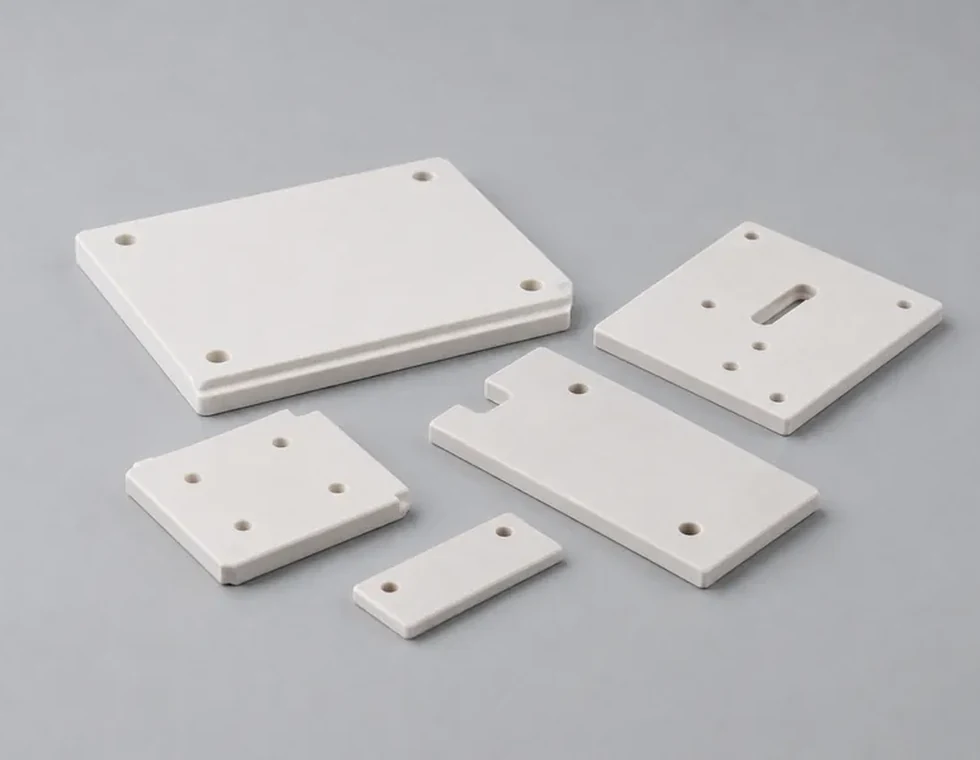
Component Type 01
Alumina Heater Plates
Used for electric heating assemblies that require excellent electrical insulation and high temperature resistance.
View DetailsUNIPRETEC ceramic heater components are designed for electrical insulation, heat resistance and reliable performance in industrial heating assemblies. We manufacture ceramic parts for heaters according to your drawings, dimensions and application requirements.
Select the right ceramic heater component based on insulation needs, operating temperature, assembly design and long-term service conditions.
For heater assemblies that need reliable dielectric performance and safe electrical separation.
For parts used close to heating elements or in continuous elevated-temperature environments.
For applications where stable dimensions and consistent performance are required during repeated heating cycles.
For ceramic parts with holes, slots and precision features that must fit heating assemblies correctly.
UNIPRETEC supplies ceramic components for a wide range of industrial heater assemblies, from insulation plates to custom structural parts.
Used for electric heating assemblies that require excellent electrical insulation and high temperature resistance.
View DetailsSuitable for heater structures that need mechanical support, insulation separation and stable performance under heat.
View DetailsManufactured according to drawings for specialized heater designs, mounting structures and thermal process equipment.
View DetailsMaterial choice depends on temperature, electrical insulation, mechanical strength and overall heater assembly design.
| Material | Typical Selection Reason | Consider When | Next Step |
|---|---|---|---|
| Alumina Ceramic | High electrical insulation, good strength and excellent heat resistance. | Ideal for many industrial heater components and insulating parts. | Common choice for general heater assemblies |
| Steatite Ceramic | Reliable electrical insulation and good dimensional stability. | Suitable for heater terminals, insulating supports and electrical assemblies. | Cost-effective option for electrical heater parts |
| Cordierite / Mullite | Good thermal shock resistance and stable performance under heat. | Useful when the component works in repeated heating and cooling conditions. | Recommended for thermal cycling environments |
| Other Technical Ceramics | Application-specific electrical, thermal or chemical requirements. | Used when standard materials do not fully match the application. | Available on request |
Final material selection should be based on operating temperature, insulation requirements, heater structure and manufacturing feasibility.
A clear drawing helps define standard dimensions, precision features and the machining needed for holes, slots or mounting details.
Tolerance capability depends on material, part geometry, machining features and the required finishing route for the heater component.
Critical length, width, thickness, hole positions and fit dimensions should be identified clearly on the drawing.
Flatness, hole position, slot accuracy and assembly-related dimensions can directly affect installation and heater performance.
As-fired or machined surfaces can be selected according to insulation, assembly contact and surface-quality requirements.
Ceramic heater components are used wherever electrical insulation, heat resistance and structural stability are important.
Used as insulating and structural parts in cartridge heaters, band heaters and other electric heating assemblies.
Suitable for heating systems and thermal process equipment operating under continuous elevated temperatures.
Applicable where cleanliness, thermal stability and precision ceramic components are required.
Used in heater assemblies that require durable insulating components close to heat sources.
Reliable for ovens, furnaces and related equipment where consistent heater support components are needed.
Manufactured to drawings for specialized heating systems with custom dimensions and assembly requirements.
For custom ceramic heater components, the fastest way to review manufacturability is to share the part drawing and the actual heating application conditions.
Inspection should focus on dimensions, flatness, hole positions, surface quality and key characteristics that affect heater assembly and performance.
Understand how insulation, thermal stability and mechanical requirements affect material choice.
Review key factors such as dimensions, machining features, tolerances and installation fit.
Support for drawings, prototype development and production of customized technical ceramic components.
Common material options include alumina, steatite, cordierite, mullite and other technical ceramics depending on the heating application and design requirements.
Yes. UNIPRETEC can manufacture ceramic heater components according to your drawings when the geometry, material and machining requirements are technically feasible.
Please share your drawing, dimensions, material preference, operating temperature, quantity and any critical assembly or insulation requirements.
Yes, prototype production can be arranged first depending on the component structure and manufacturing route.
They are suitable for electric heaters, heating assemblies, thermal process equipment, semiconductor systems and other applications that require insulation and heat resistance.
Send your drawing and application requirements for material selection, manufacturability and engineering review.