Hexagonal Boron Nitride vs Pyrolytic Boron Nitride
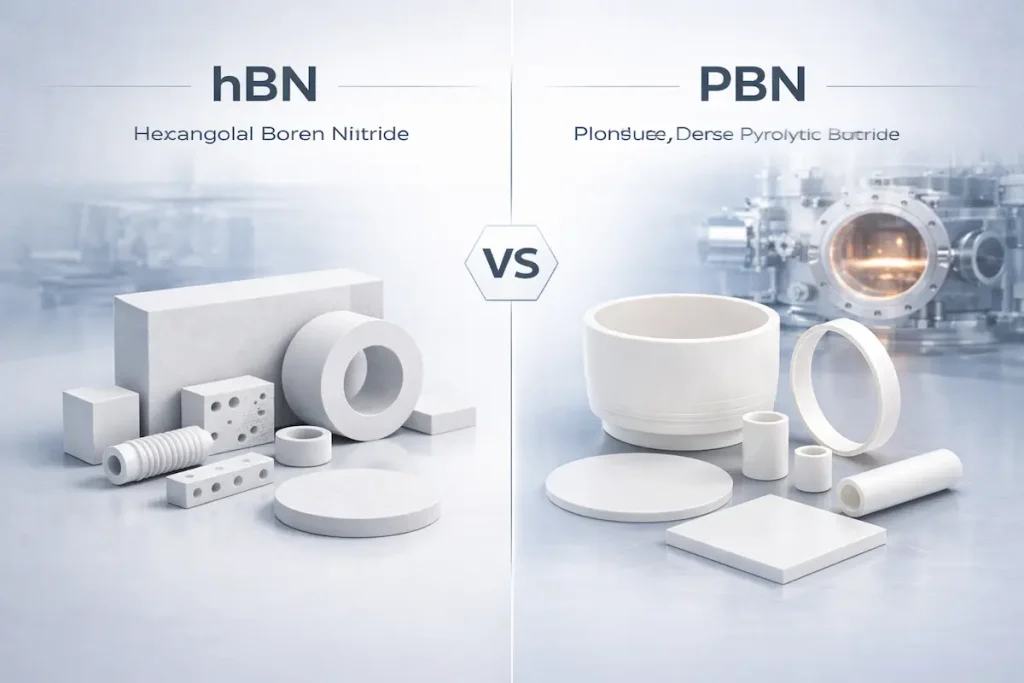
Quick Answer: The main difference between hexagonal boron nitride (hBN) and pyrolytic boron nitride (PBN) is not just the raw material name, but the manufacturing route, purity level, density, anisotropy, machinability, and process suitability. In most industrial applications, hBN is chosen for machinability, electrical insulation, thermal shock resistance, and lower cost. PBN is usually selected […]
What Are Ceramic Parts? Types and Applications
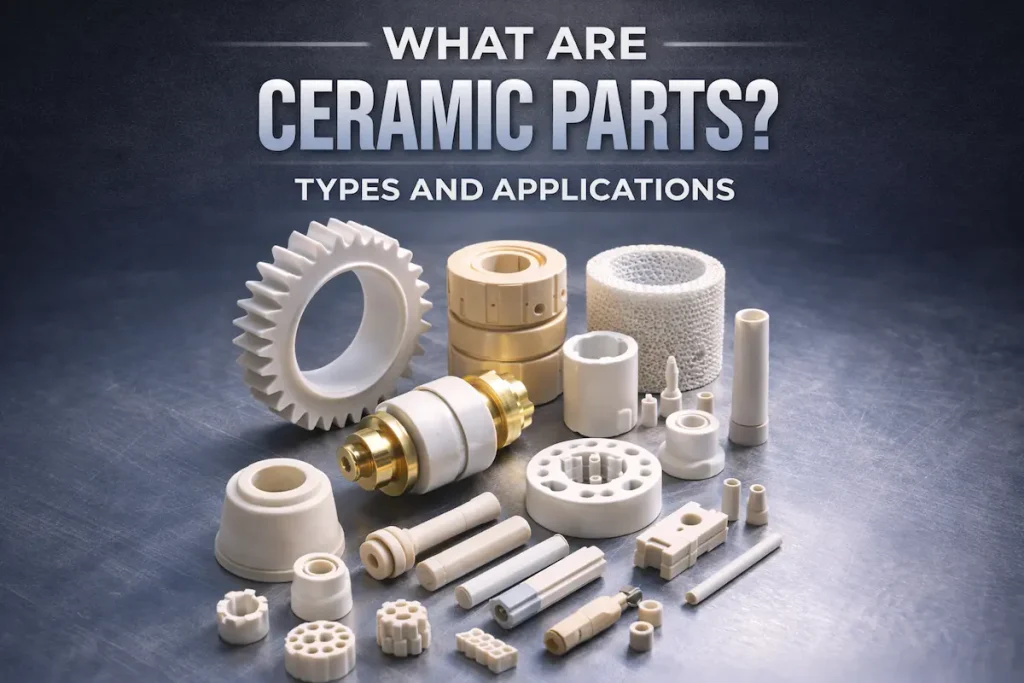
Quick Summary: Ceramic parts are engineered components made from technical ceramic materials to deliver heat resistance, electrical insulation, wear resistance, and dimensional stability in demanding environments. They are used across industrial ceramic applications where metals, plastics, or standard materials cannot maintain performance, reliability, or service life. Introduction Ceramic parts are precision components manufactured from advanced […]
What Is a Ceramic Substrate? Complete Guide
Quick Summary: A ceramic substrate is a flat engineered ceramic base used to support, insulate, and thermally manage electronic circuits, power devices, sensors, and high-reliability components. It is selected when standard PCB materials cannot handle heat, voltage, dimensional stability, or harsh environments, especially in electronic packaging and high-power applications. Introduction A ceramic substrate is not […]